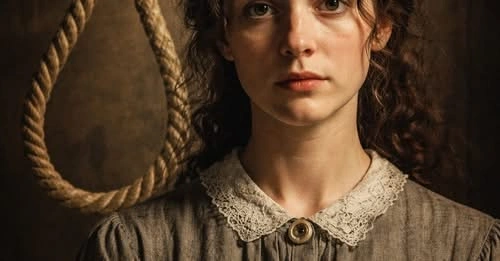
Elizabeth Woolcock
The only Woman Hanged in the Adelaide Gaol
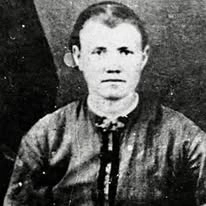
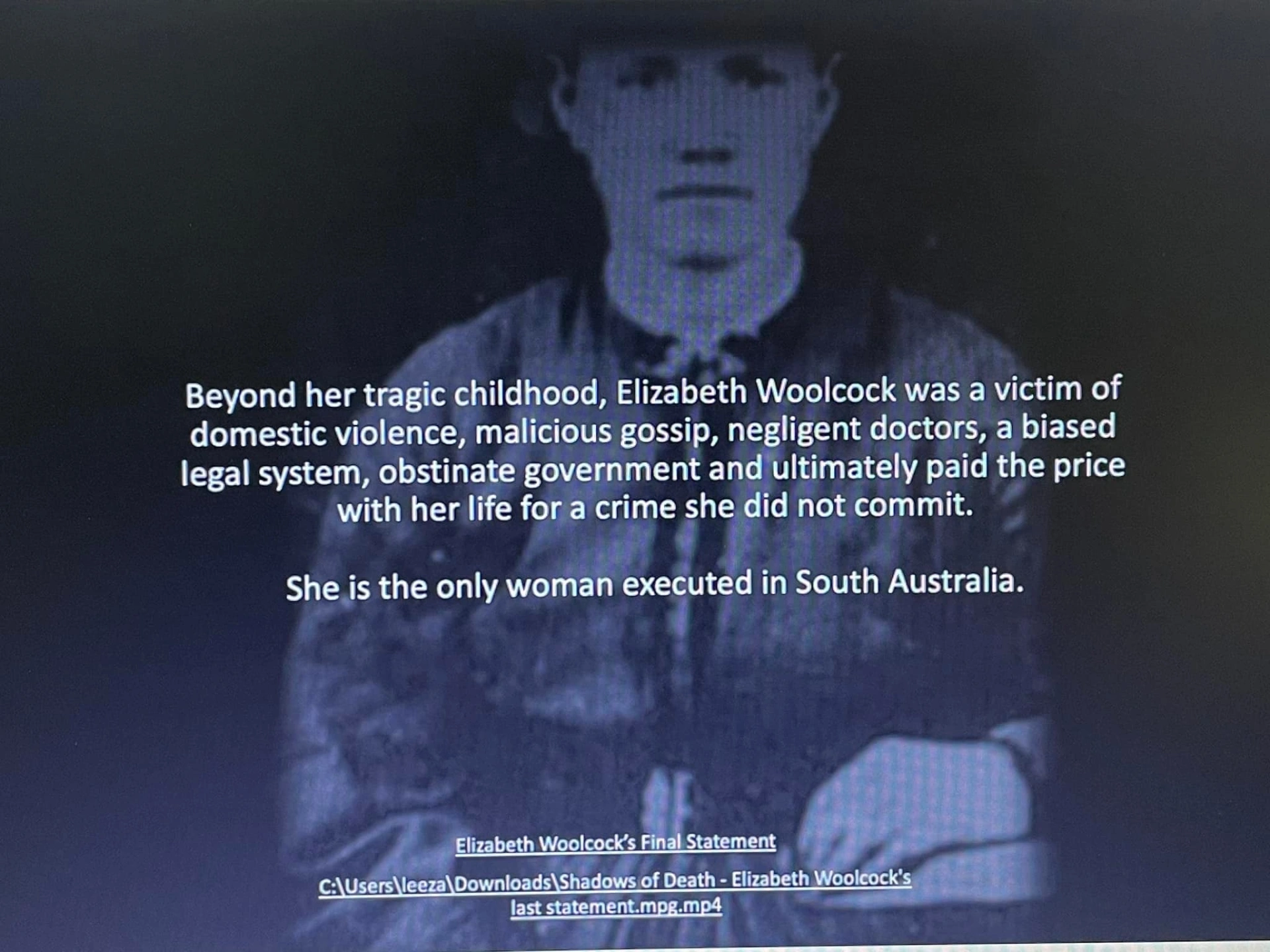
In 1873 Elizabeth Woolcock was legally hanged for poisoning her husband and remains the only woman executed in South Australia. Beyond her tragic childhood she was a victim of domestic violence, malicious gossip, negligent doctors, a biased legal system, obstinate government and ultimately paid the price with her life for a crime we believe she did not commit.
Please sign the petition to request that Elizabeth Woolcock receives a posthumous pardon as an act of justice, mercy and integrity.

Elizabeth's Story
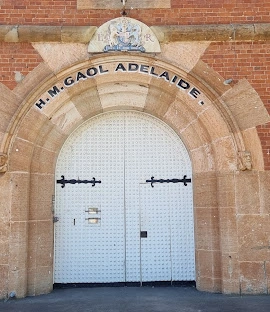
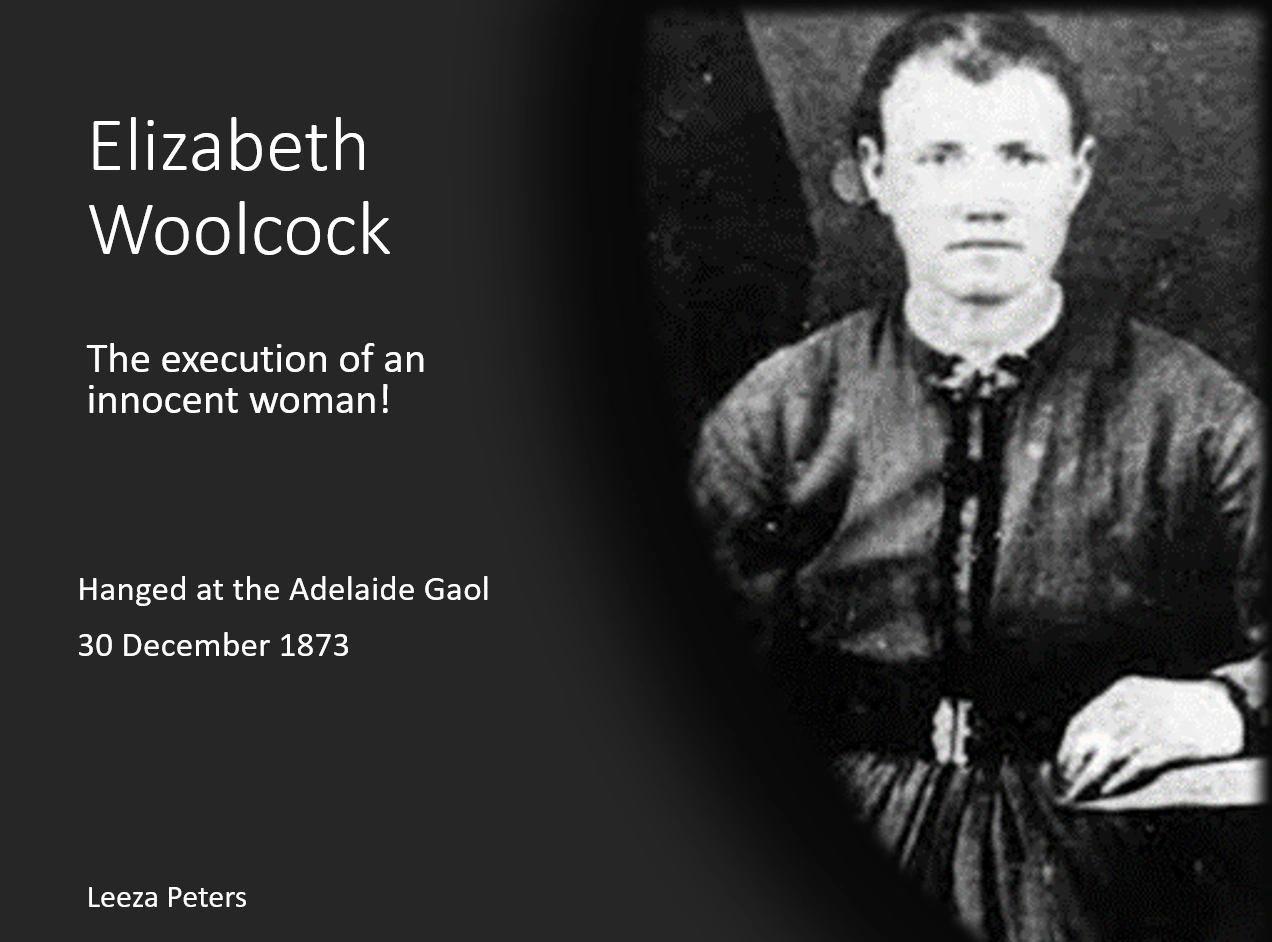
Elizabeth Lillian Woolcock (née Oliver) was born in South Australia on 20 April 1848. On 30 December 1873, aged just 25, she was hanged at Adelaide Gaol for the murder of her husband, Thomas Woolcock. She remains the only woman ever executed in South Australia. Her body was buried within the gaol walls, where it remains today.
Her case has long unsettled historians, lawyers, and the local community. Although Elizabeth was convicted of murder by mercury poisoning, serious questions persist about the medical evidence, the conduct of the investigation, and the fairness of her trial. Many now argue that she was a victim of sustained domestic violence and that her conviction reflects the legal and cultural limits of colonial justice.
Elizabeth’s early life was marked by instability and trauma. Born in Burra Burra, she moved with her family to the Victorian goldfields at Ballarat during the gold rush. When she was four, her mother left for Adelaide, leaving Elizabeth to be raised by her father in harsh and insecure conditions. At the age of seven, she was violently assaulted and left for dead. Two years later, she believed her father had died of tuberculosis, leaving her effectively orphaned, although he in fact lived until the year of her execution.
As a teenager, Elizabeth was reunited with her mother in Moonta, a copper-mining town in South Australia. She lived with her mother and stepfather and became active in the Wesleyan Church, teaching Sunday school. In late 1866, she became housekeeper to Thomas Woolcock, a Cornish immigrant and widower with two young sons. After the younger child, Francis, died of fever, Elizabeth continued caring for the surviving son, Thomas John, and maintaining the household despite her stepfather’s objections. Elizabeth and Thomas married in February 1867.
The marriage was unhappy and, by multiple accounts, violent. Woolcock was known to drink heavily and to abuse his wife. Elizabeth attempted to leave him several times but was repeatedly forced to return. Isolated and distressed, she suffered from depression and insomnia and was prescribed morphine, a common but poorly regulated treatment at the time.
In July 1873, Woolcock became seriously ill. Several doctors attended him, offering conflicting diagnoses. Dr Bull treated him first, prescribing medicine containing calomel, a mercury compound. Woolcock later stated that the treatment “made him sick.” Dr Dickie then treated him for a gastric condition but failed to follow up. On 2 August, Dr Herbert diagnosed mercury poisoning, and under his care Woolcock improved markedly. Herbert later stated his patient had a good chance of recovery. Woolcock then ceased treatment, citing cost, and returned to Dr Dickie, who disregarded the mercury diagnosis. Woolcock deteriorated and died on 4 September 1873. Dr Dickie certified the cause of death as exhaustion following prolonged illness.
On the night before his death, Woolcock’s cousin, Elizabeth “Beth” Snell, contacted Dr Dickie, claiming Elizabeth had been seeking poisons from chemists. An inquest was convened. Elizabeth, exhausted after months of nursing her husband, was questioned by fourteen local men, including a police sergeant and a justice of the peace. An autopsy revealed mercury in Woolcock’s body, and the family dog, later exhumed, was also found to contain mercury. Elizabeth was arrested and committed for trial.
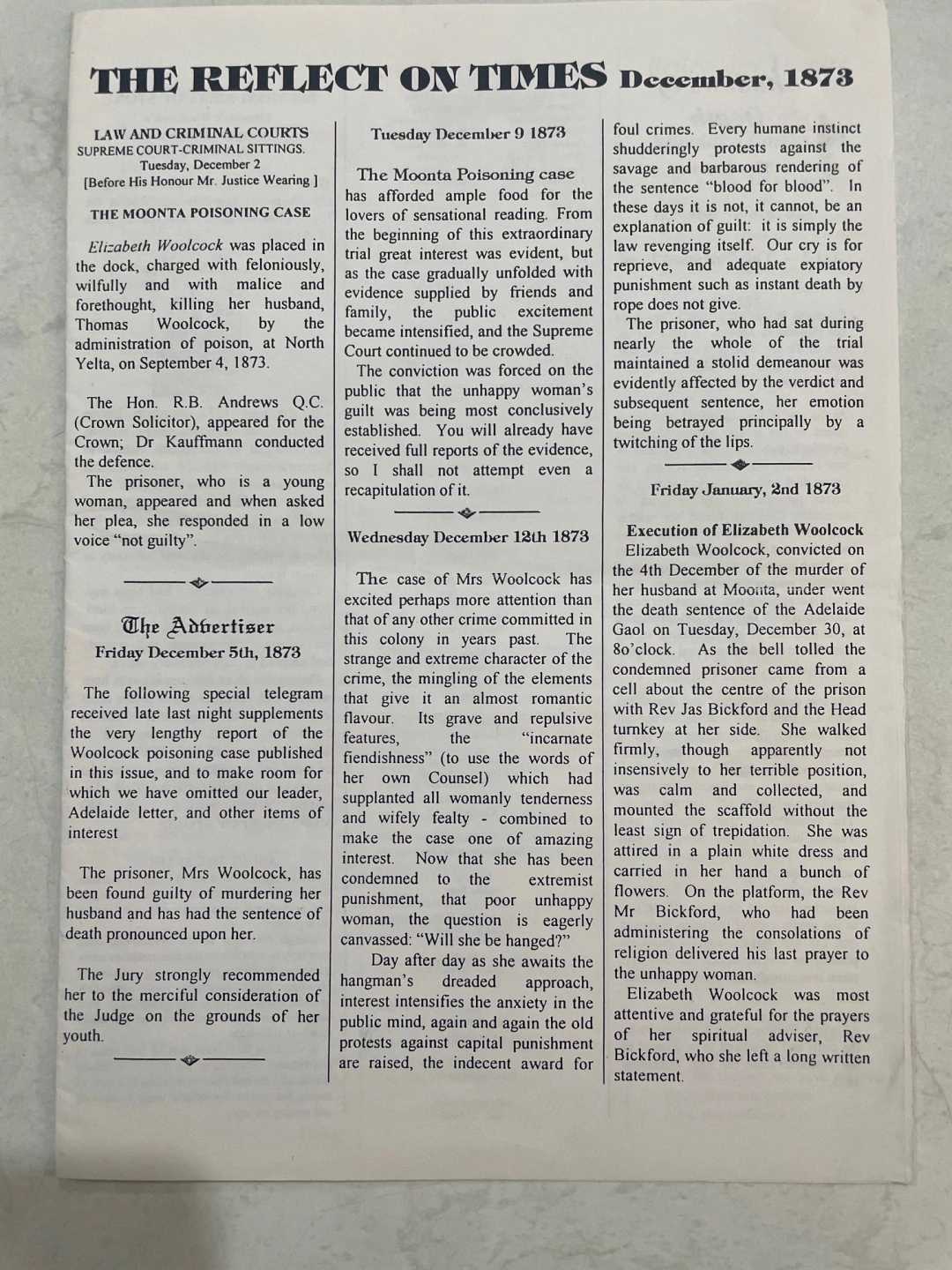
Her trial in Adelaide drew intense public attention. The prosecution was led by Richard Bullock Andrews QC, a former Attorney-General. Elizabeth was barred by law from giving evidence in her own defence. Her counsel called no witnesses and conducted minimal cross-examination. After deliberating for just twenty minutes, the jury found her guilty and recommended mercy due to her youth.
That recommendation was rejected. Despite a detailed letter from metals specialist William Ey outlining twenty-six reasons the verdict was unsafe, the Executive Council voted to proceed with the execution. Elizabeth Woolcock was hanged on 30 December 1873.
More than 150 years later, her case remains unresolved in the public conscience, raising enduring questions about domestic violence, forensic science, women’s legal rights, and capital punishment in colonial Australia.
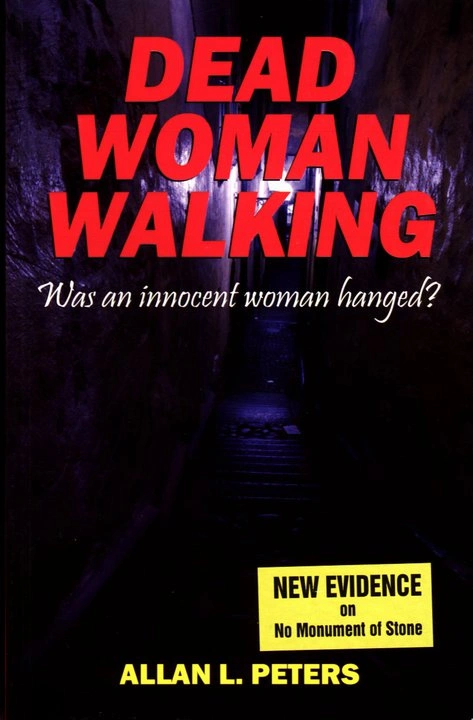
Dead Woman Walking
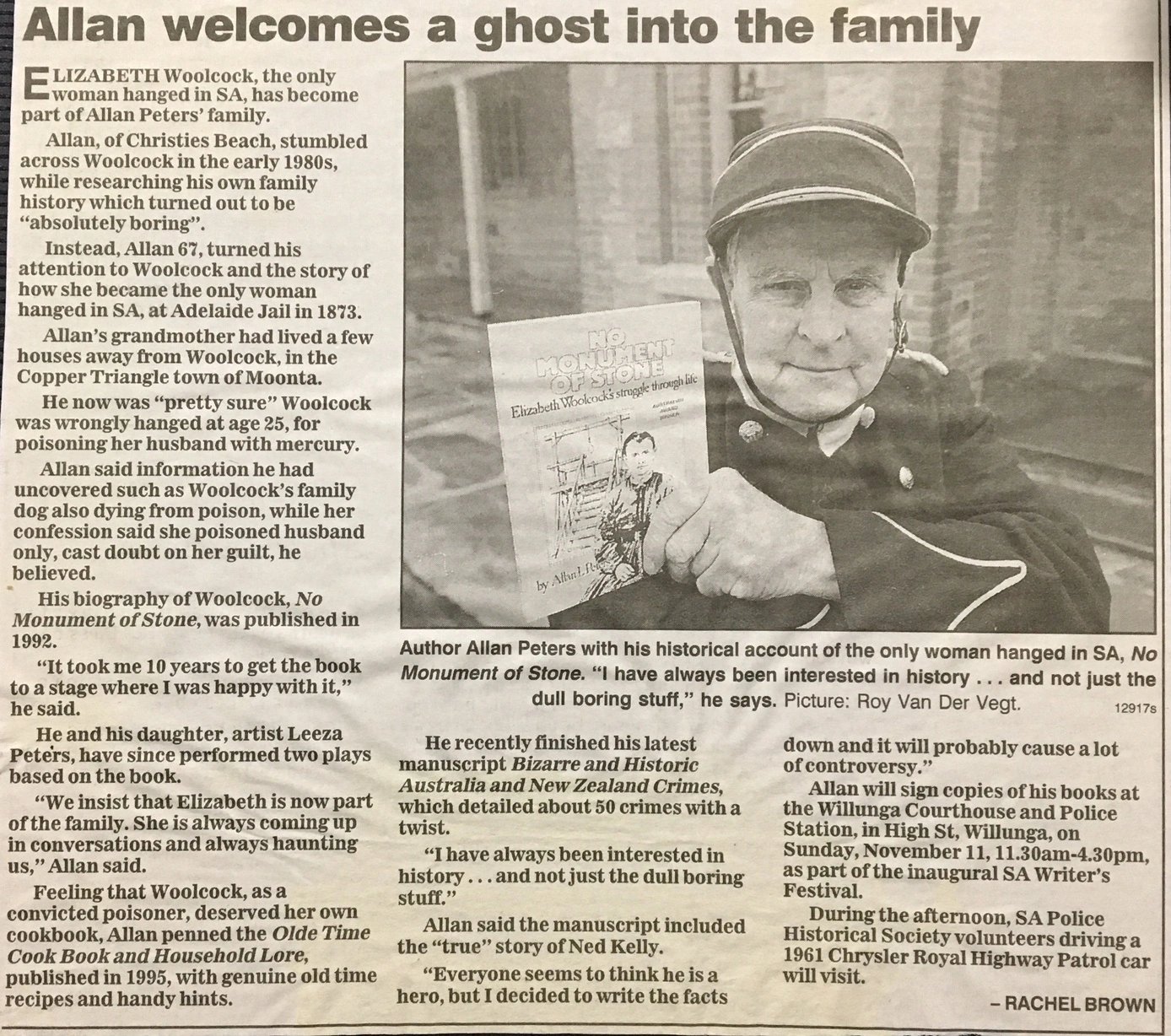
Dead Woman Walking is a speculative biography by Allan Peters is his second book on the life and trial of Elizabeth Woolcock. It follows his award winning, self published first book, No Monument of Stone, and is based on decades of research into one of South Australia’s most tragic and troubling legal cases.
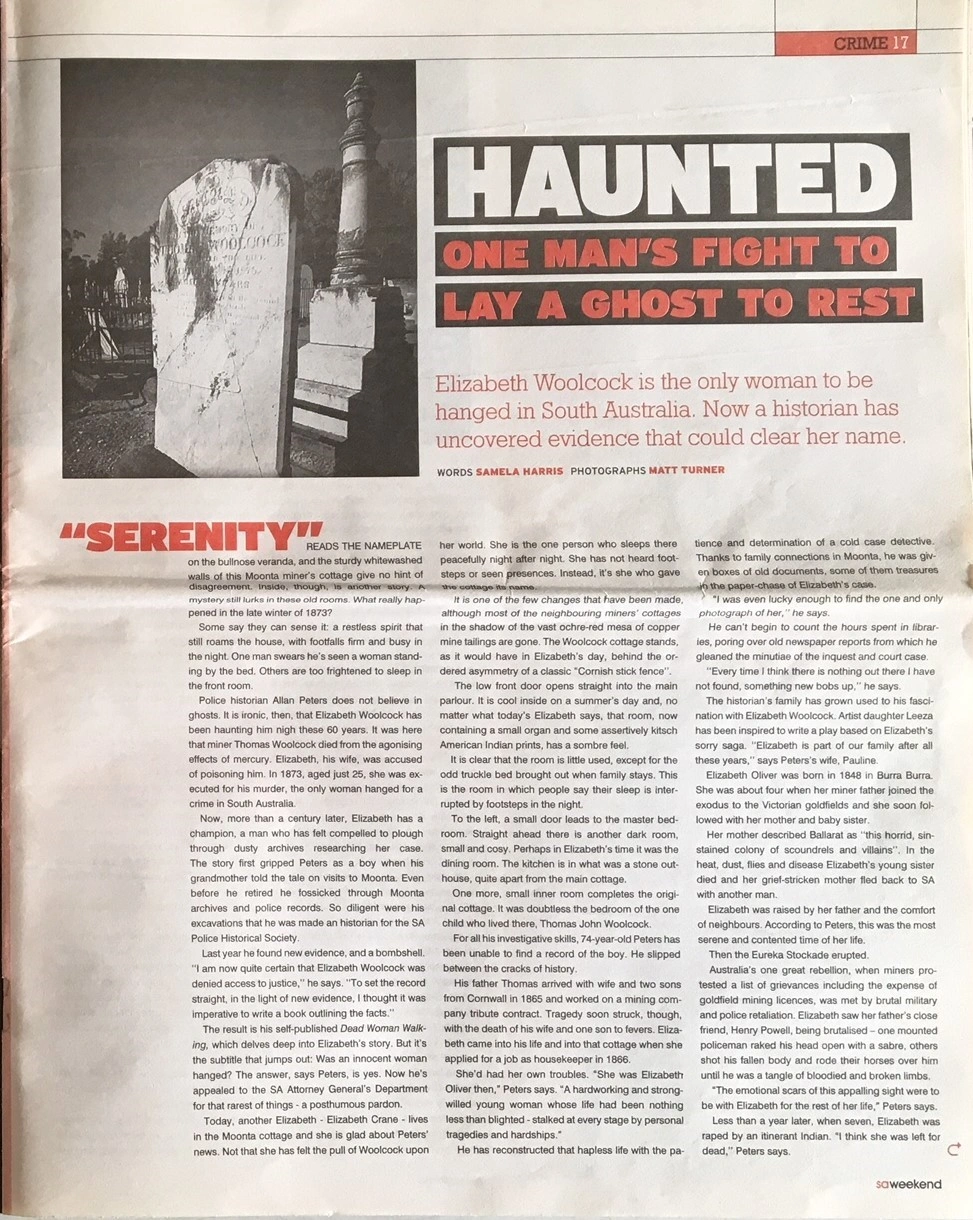
Since the publication of No Monument of Stone, Peters uncovered substantial new evidence that was not available at the time of his initial writing. Dead Woman Walking presents this material in full, raising serious questions about the fairness of Elizabeth Woolcock’s 1873 trial and her conviction for the murder of her husband. The author argues that she was denied impartial justice and unjustly executed for a crime she did not commit, and that this new evidence may one day prompt an official investigation and a posthumous pardon.
Elizabeth Woolcock remains the only woman ever executed in South Australia. Convicted amid gossip, innuendo, and misrepresentation, Elizabeth faced the gallows at just twenty five years of age and was buried in an unmarked grave on Murderers Row. Her story is both a deeply personal tragedy and a significant chapter in Australian legal history, one that still demands scrutiny today.
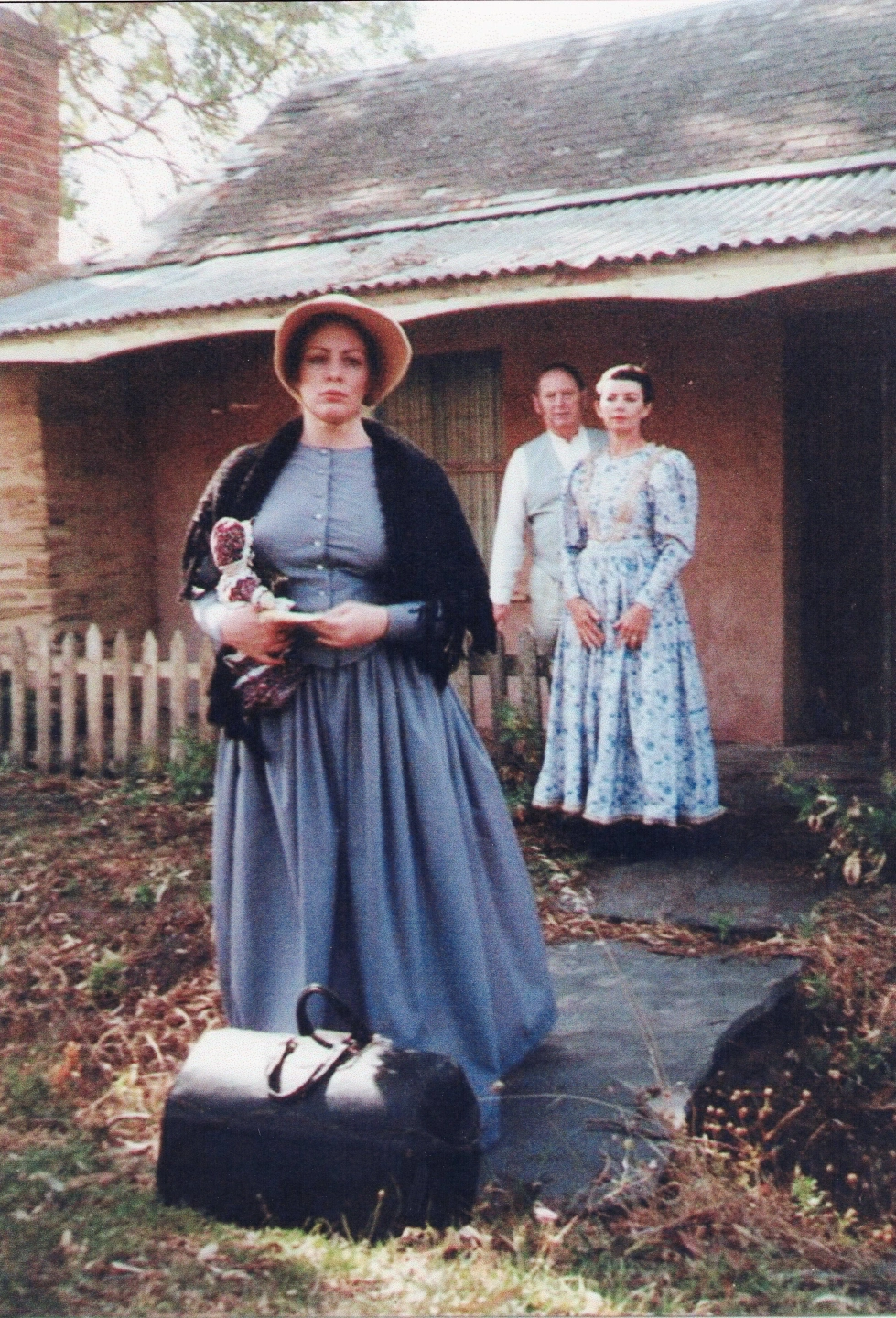
Speculative Biography
Dead Woman Walking is a speculative biography that blends rigorous historical research with imaginative reconstruction. It explores Elizabeth Woolcock’s inner life and possible experiences where the historical record is silent, using conjecture and authorial imagination while remaining grounded in evidence. Its purpose is not to replace history, but to humanise it and offer a fuller, more compassionate picture of a woman whose voice was never properly heard.
Over time, many of the book’s speculative elements have taken on the status of “pseudo fact” and have been repeated on websites, films and documentaries, podcasts, YouTube content, and AI generated material. As a result, conjecture and interpretation are increasingly being mistaken for established historical truth. The imagined has begun to overwrite the uncertain, and in some cases the documented, blurring the line between evidence and invention.
The only person who could ever truly know what happened in Elizabeth’s life is Elizabeth herself. If she could hear her story being retold today, she might feel relief that her name is finally spoken with empathy rather than contempt. But she might also feel grief and disbelief that imagined fragments of her inner life have hardened into accepted facts, while the real injustices done to her in life and at her trial remain unresolved.
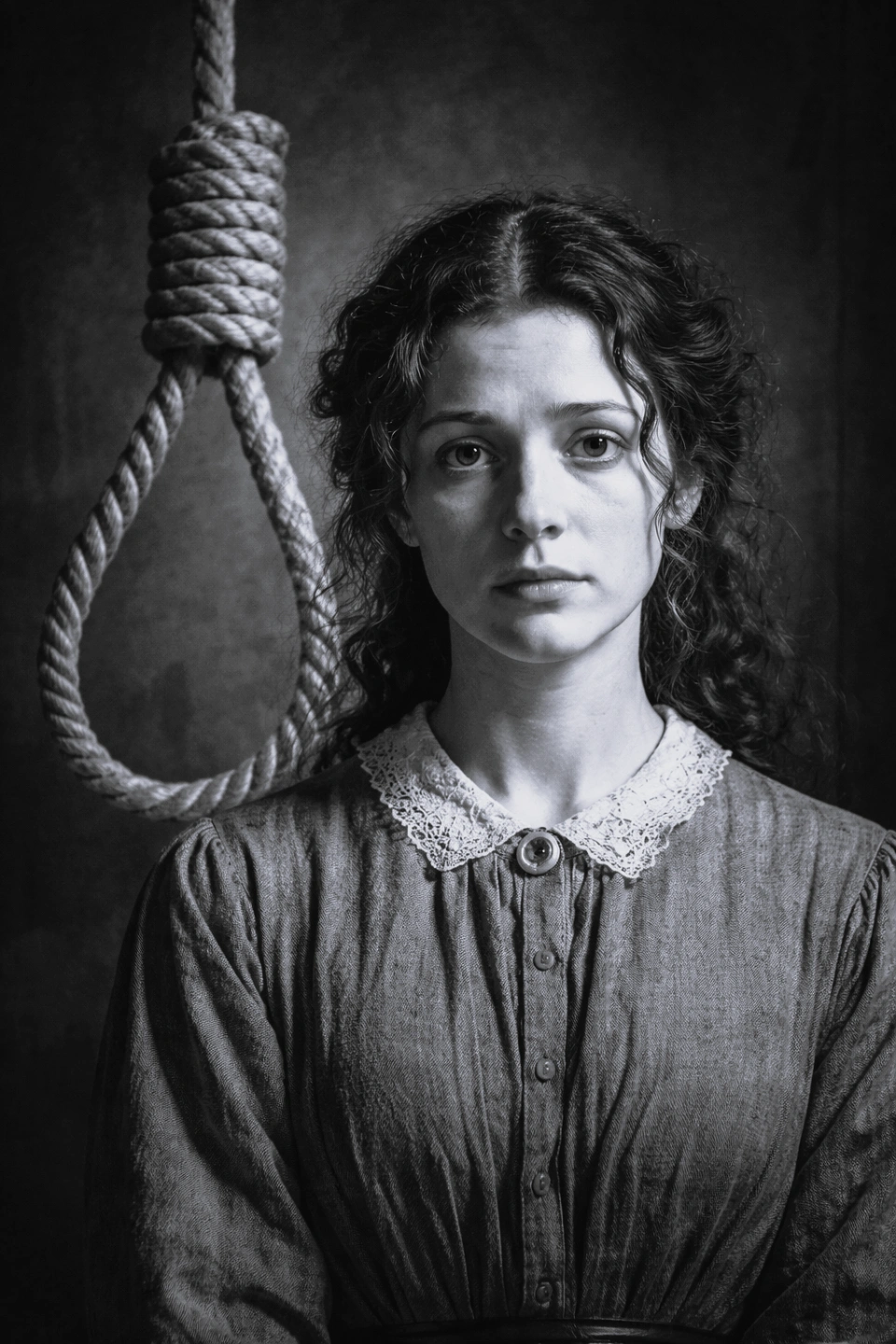
Petition of Elizabeth Lillian Woolcock
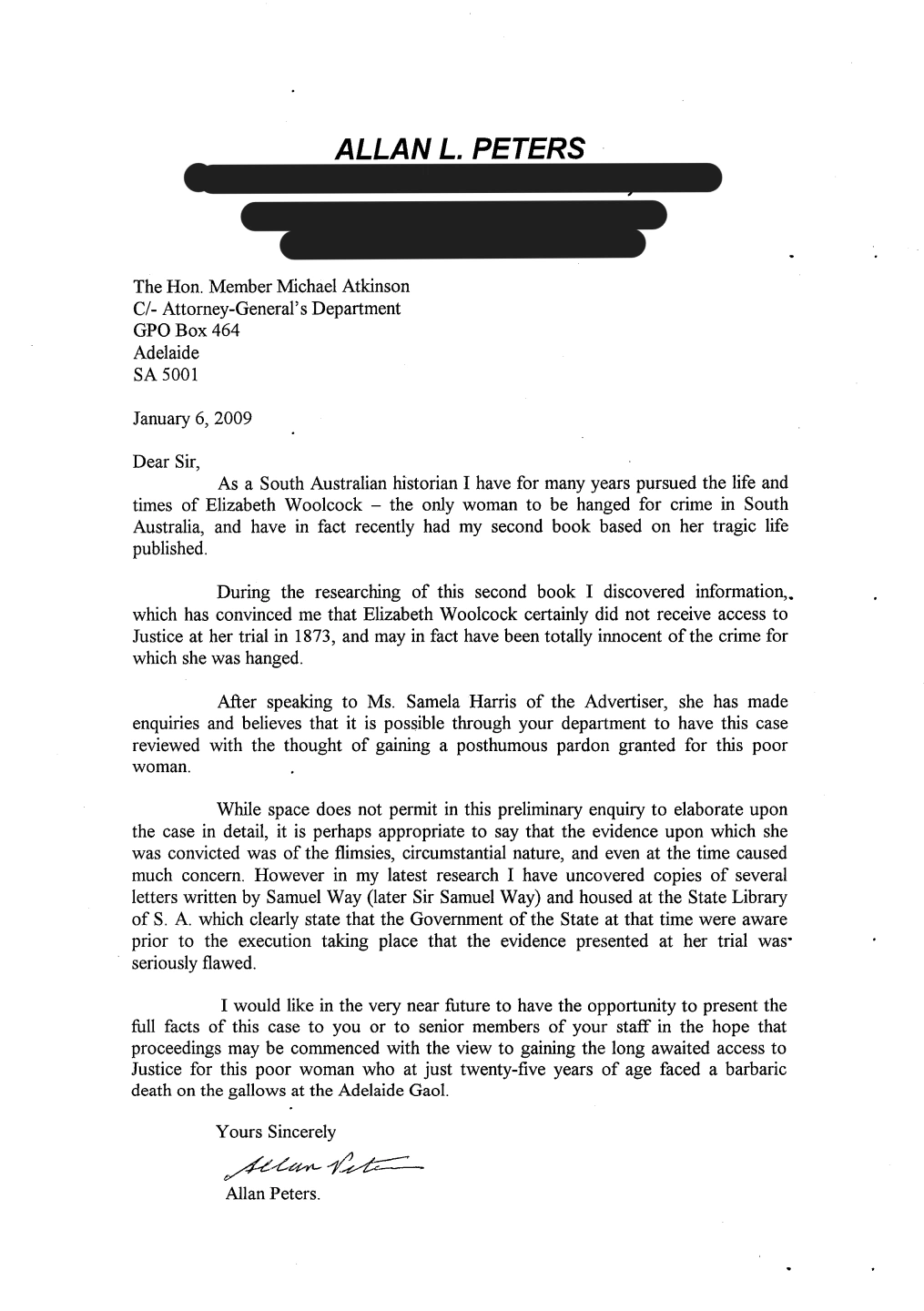
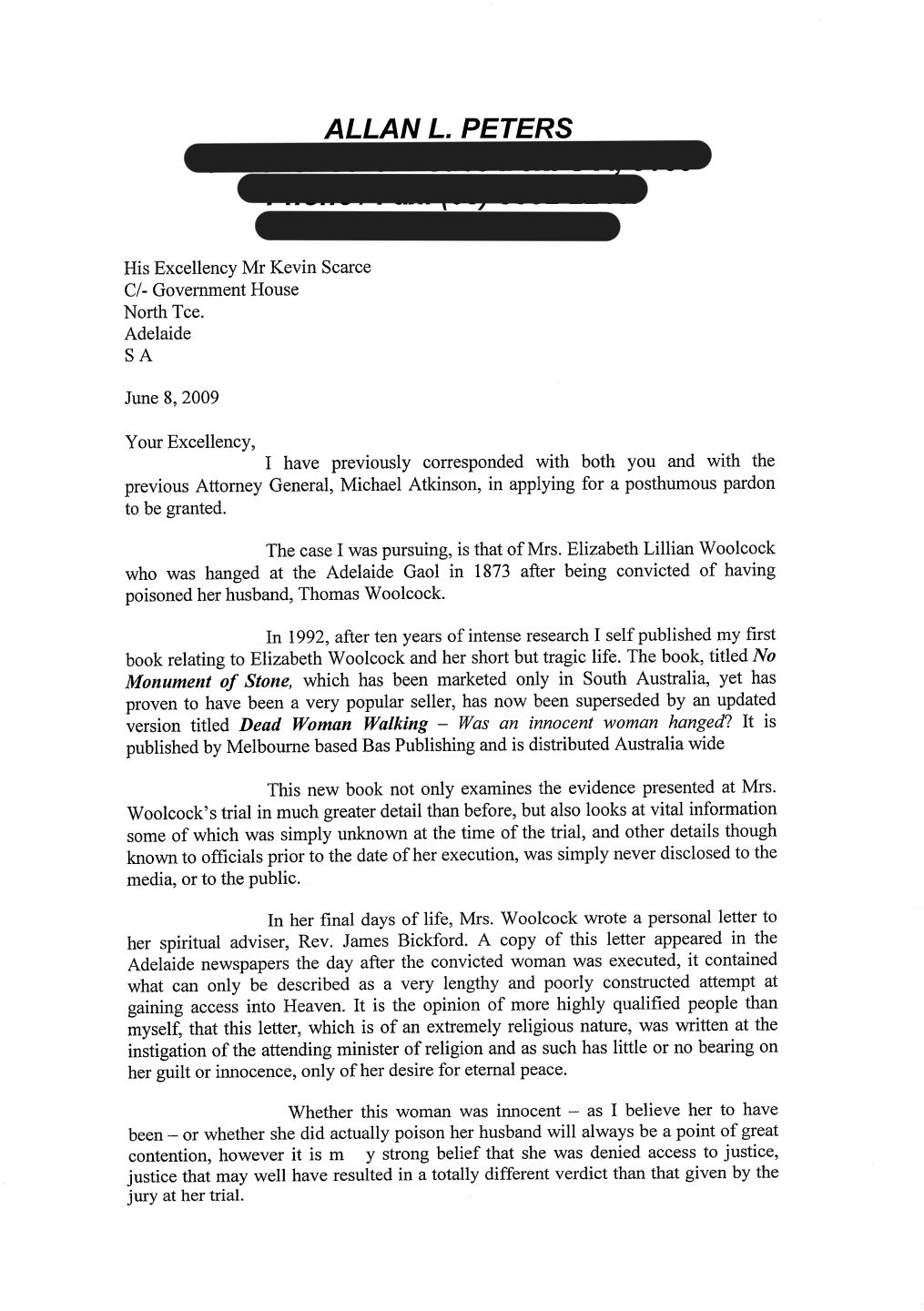
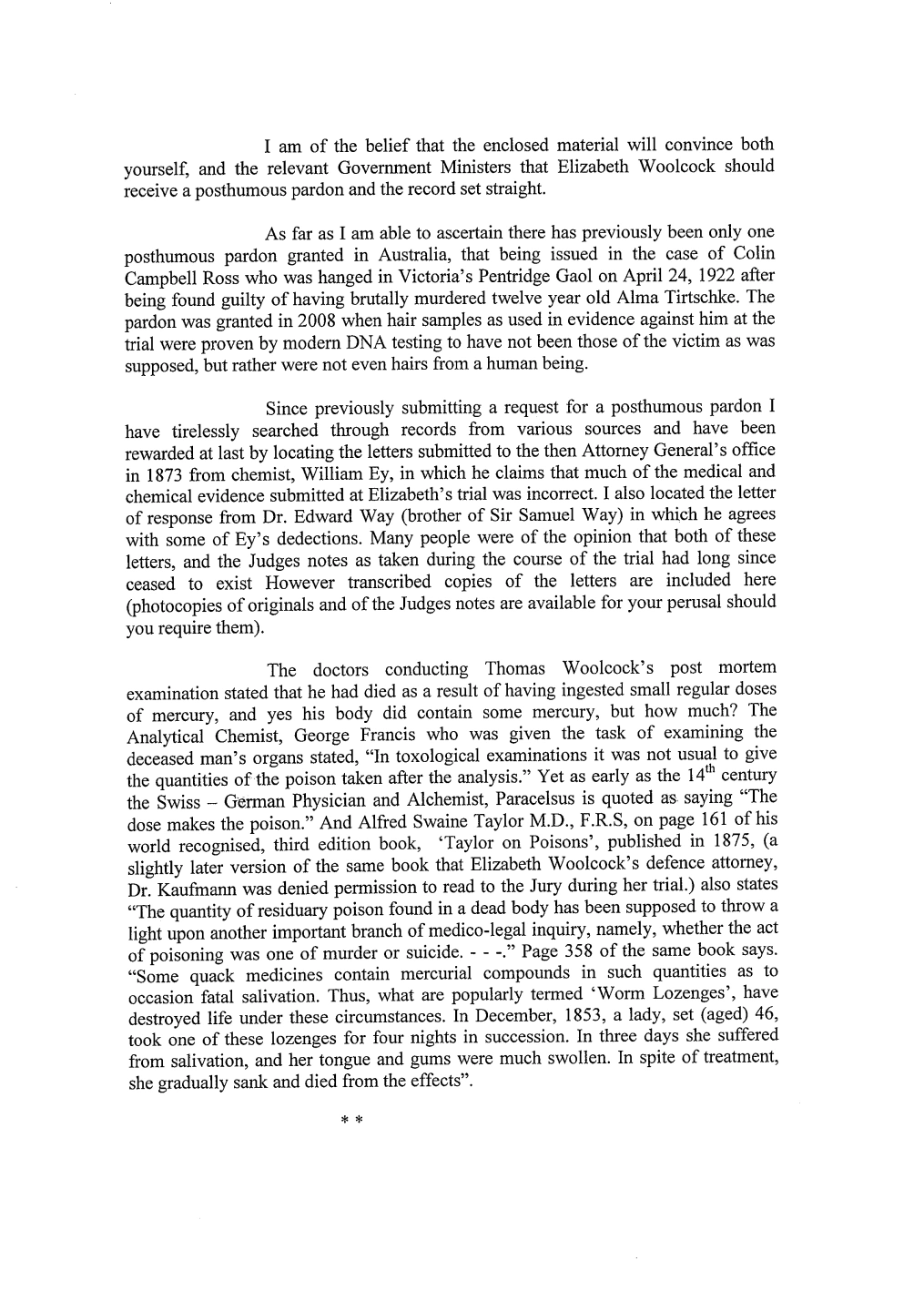
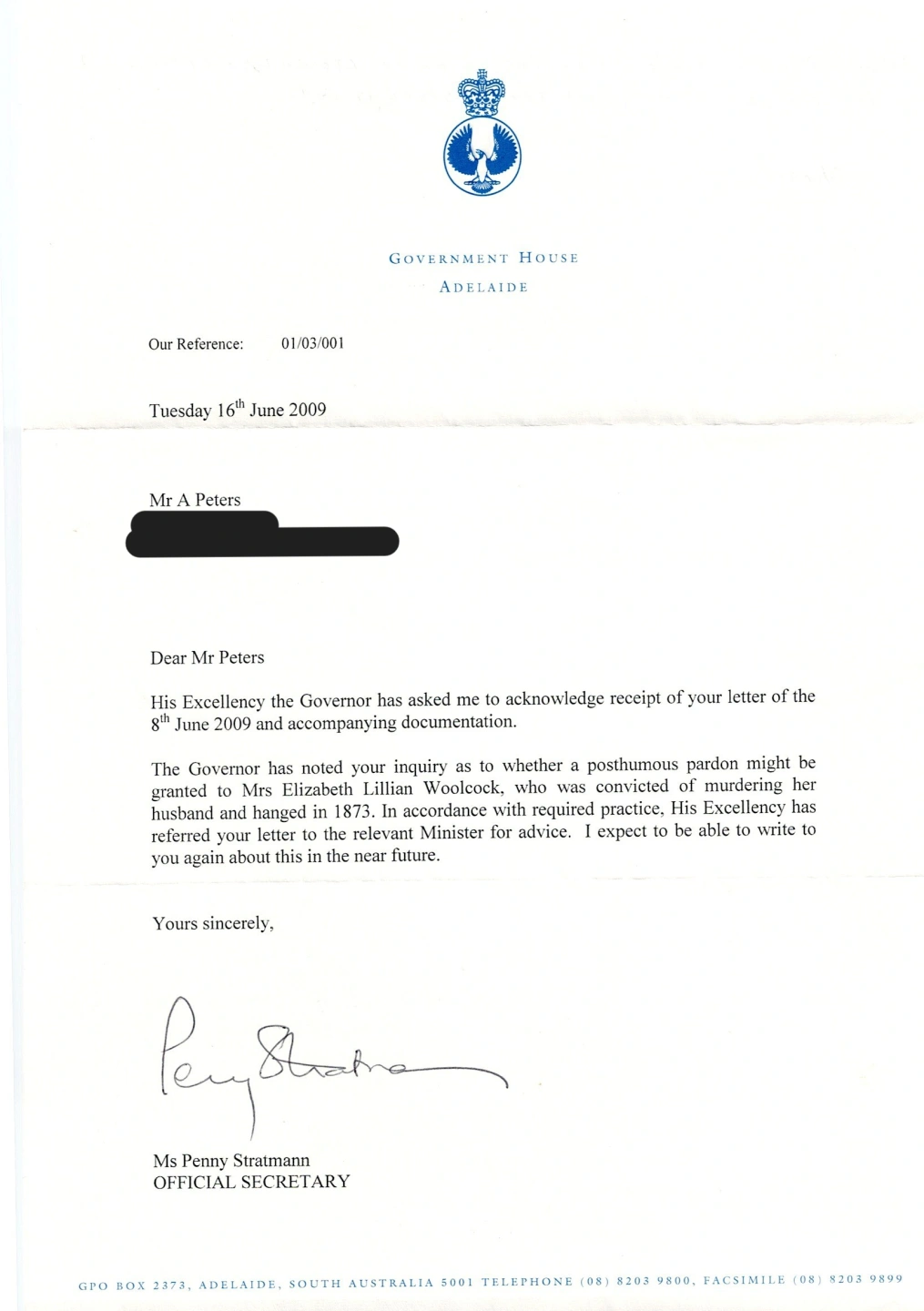
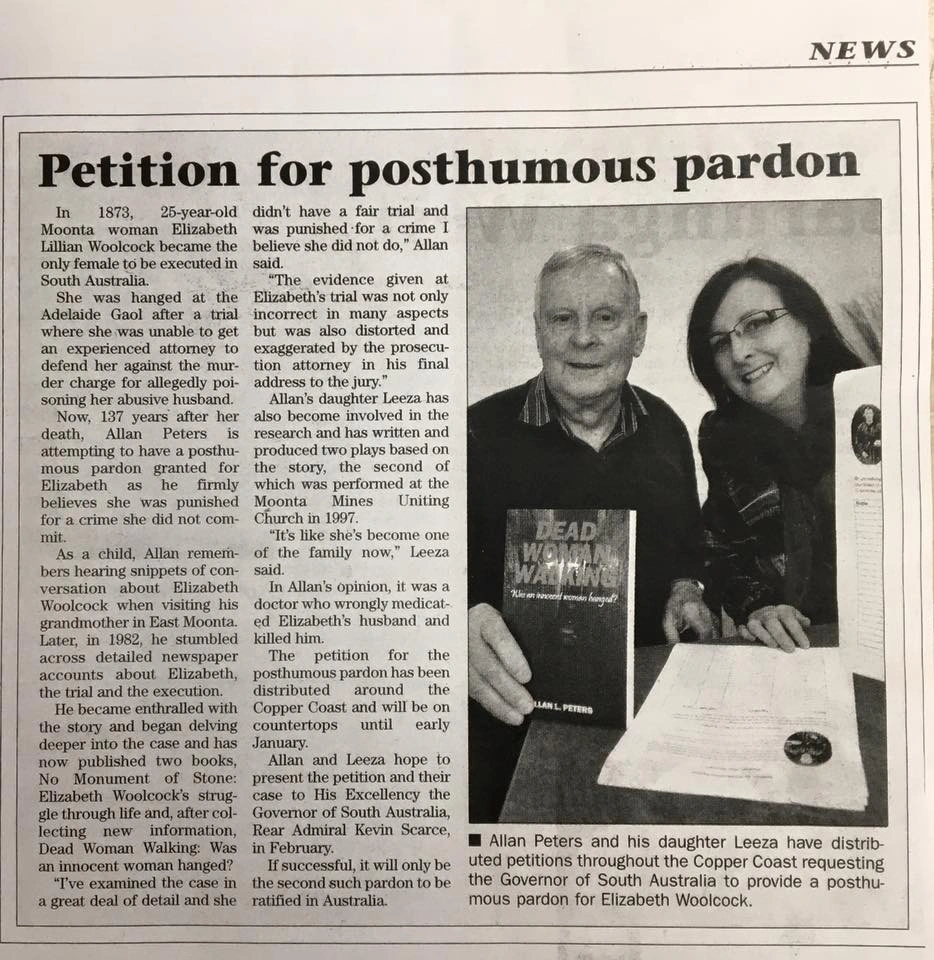
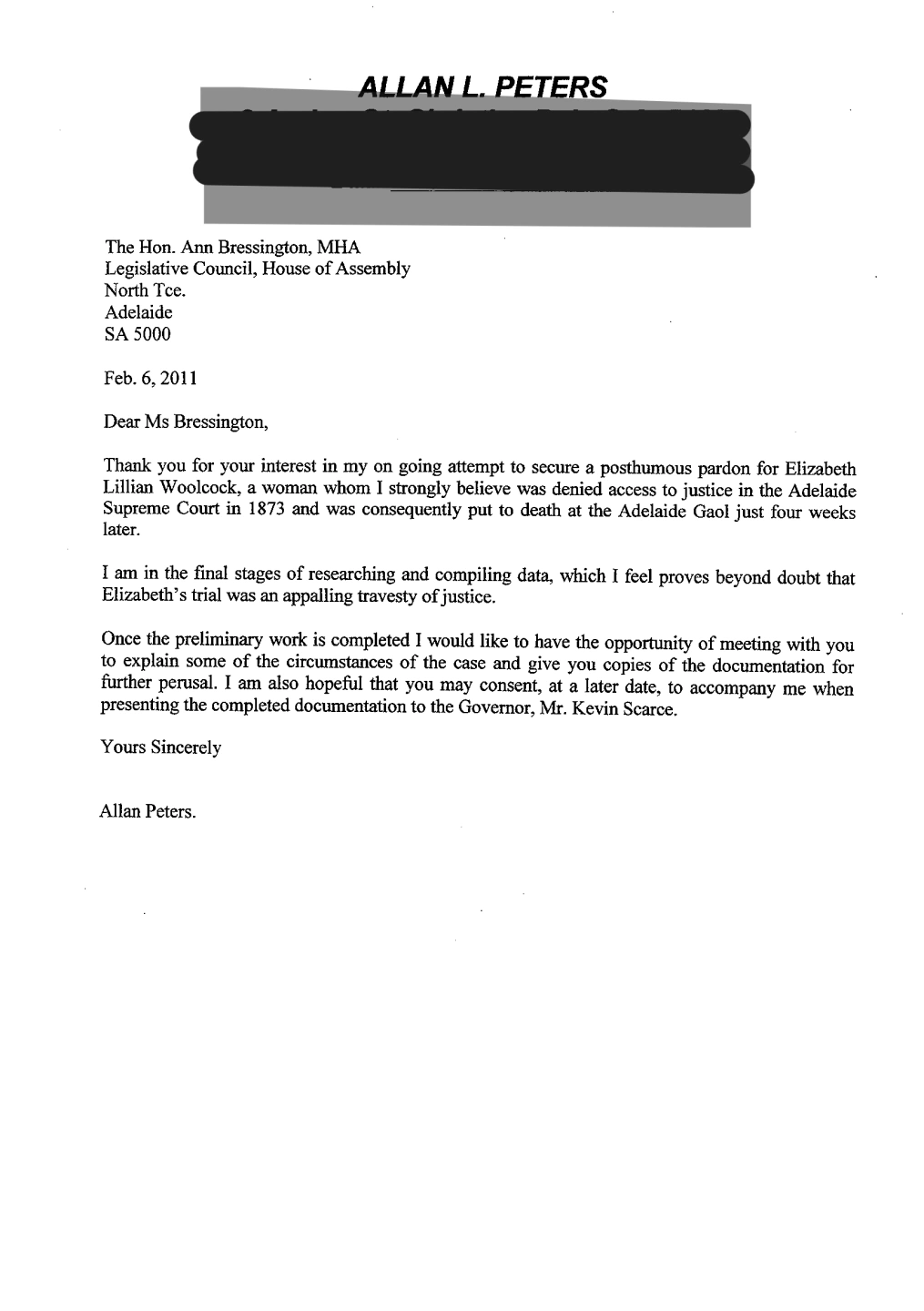
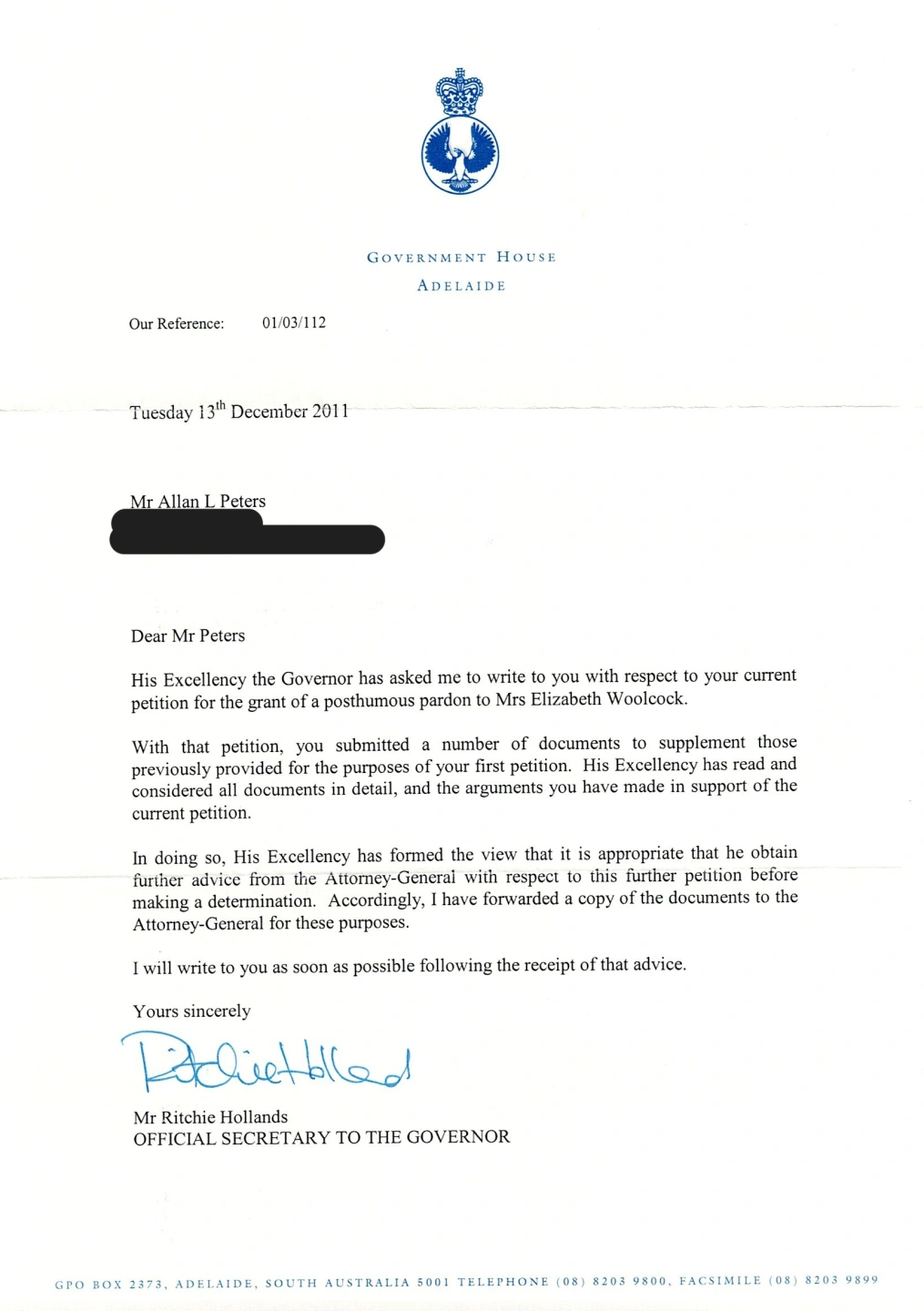
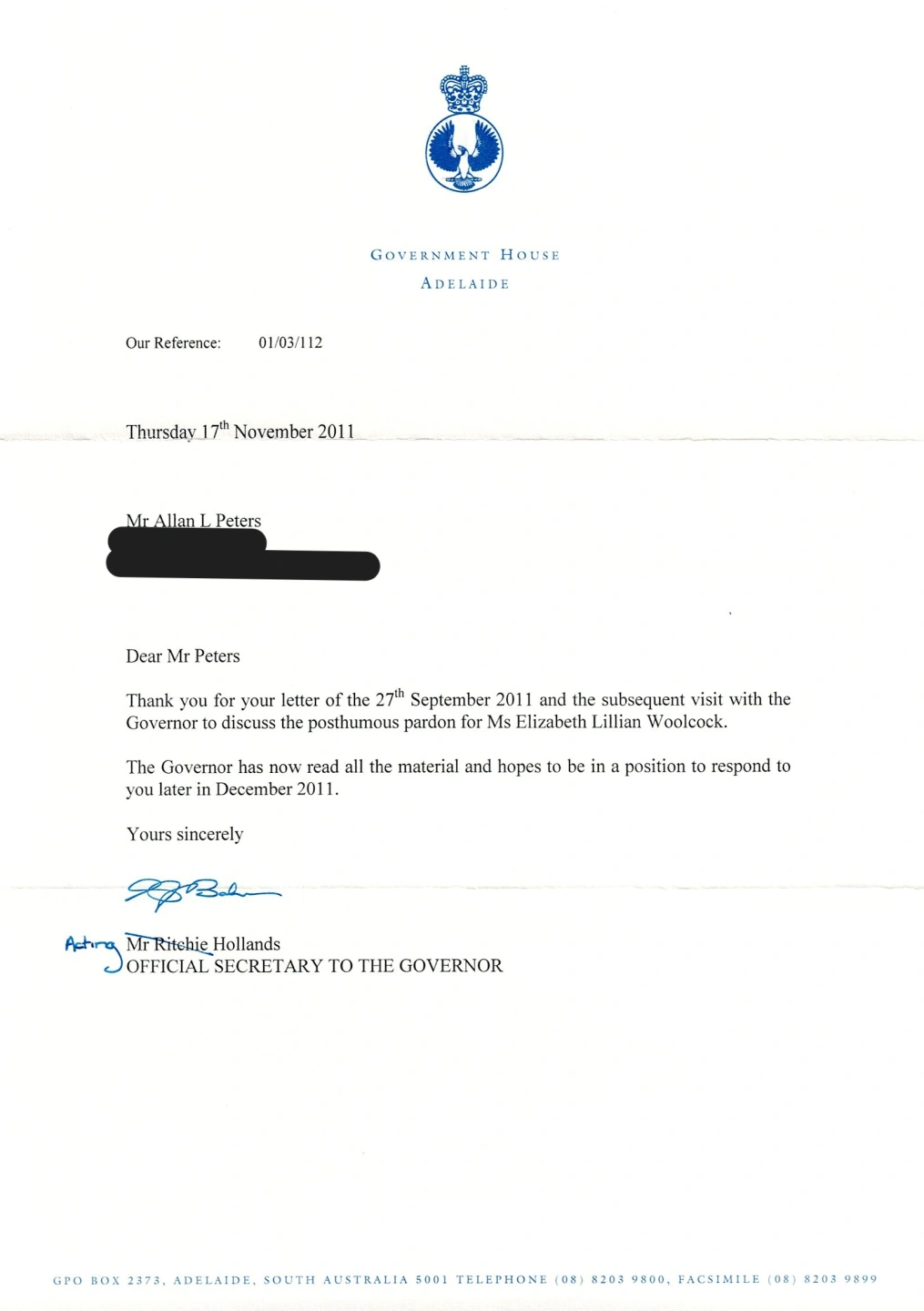
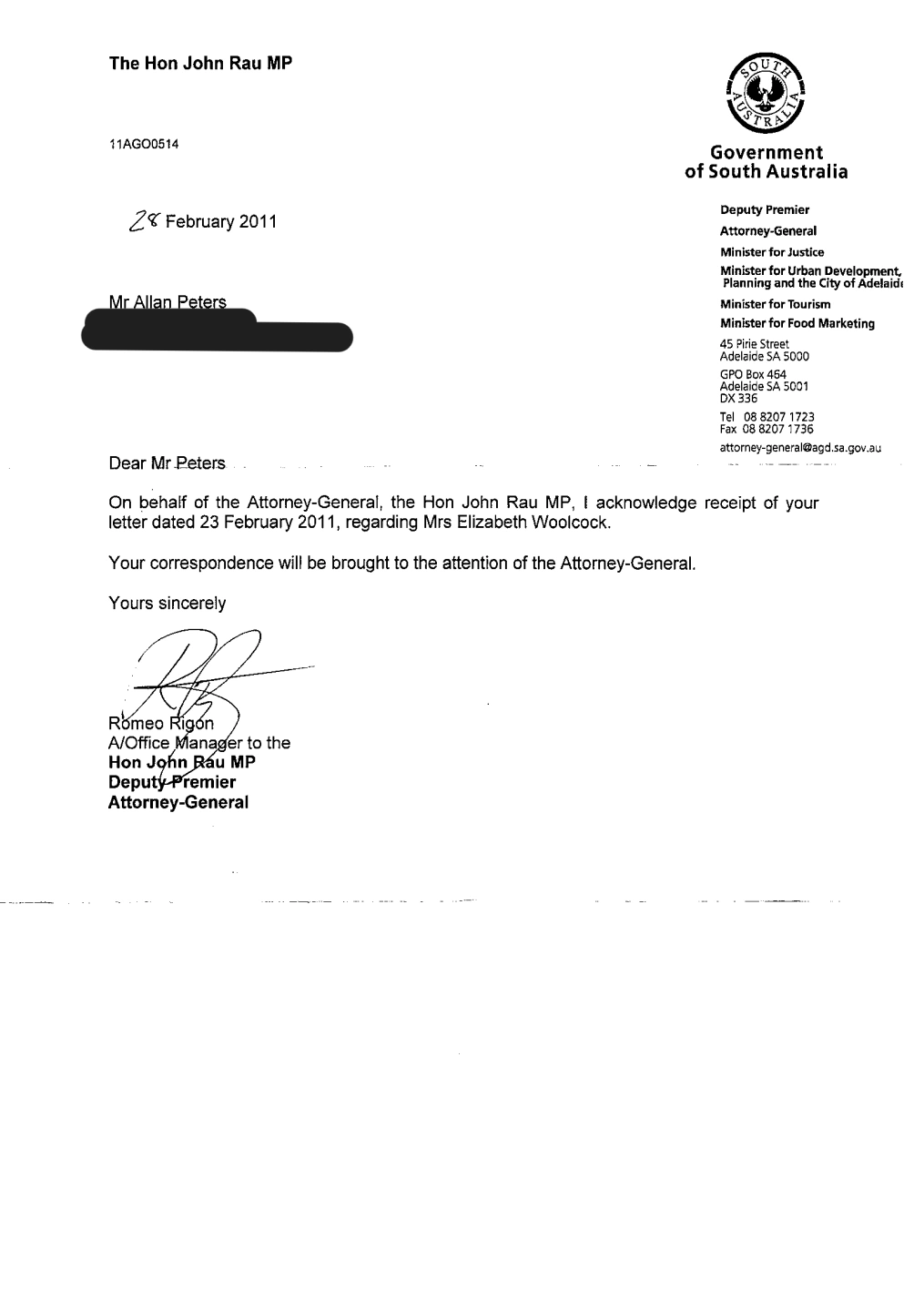
In 2009, Allan Peters, then serving as Police Historian, submitted a petition to then Governor Kevin Scarce seeking a posthumous pardon for Elizabeth Woolcock. It was declined. In 2011, after uncovering new historical material, including evidence long hidden from public scrutiny, Allan and his daughter Leeza Peters submitted a second petition. This was also rejected, with the statement “despite these new arguments and evidence, it was open to the jury to be satisfied beyond doubt that Mrs Woolcock was guilty of the murder of her husband.”
In 2026, a new submission will be made to the Governor of South Australia, Her Excellency the Honourable Frances Adamson AC, with community support. It argues that Elizabeth Woolcock’s conviction arose from a colonial legal system that failed basic standards of fairness and evidentiary integrity. The case against her was entirely circumstantial, with no direct evidence of poisoning, and was supported by inconclusive and contradictory medical testimony. Witness evidence was shaped by gossip, prejudice, and social hostility, while domestic violence, social isolation, and systemic misogyny materially prejudiced both the investigation and the trial.
The submission also reveals that material correspondence from an Assayer (Metals Chemist), relevant to her defence and plea for mercy, was suppressed and unlikely disclosed to the judge or properly considered by the Executive Counsel at the time. Although the jury recommended mercy, this was ignored, and under modern legal standards the evidence would not support a conviction, let alone the death penalty.
Please feel free to sign the online petition https://c.org/rjcSb9cmNV
Or you can sign a petition that will be presented to the House of Assembly by signing in person at the Adelaide Gaol, Moonta Museum or various other organisations follow the Elizabeth Woolcock Deserves A Posthumous Pardon Facebook Page for details. https://www.facebook.com/HangingElizabeth/
Grounds for the Petition are under FAQ's
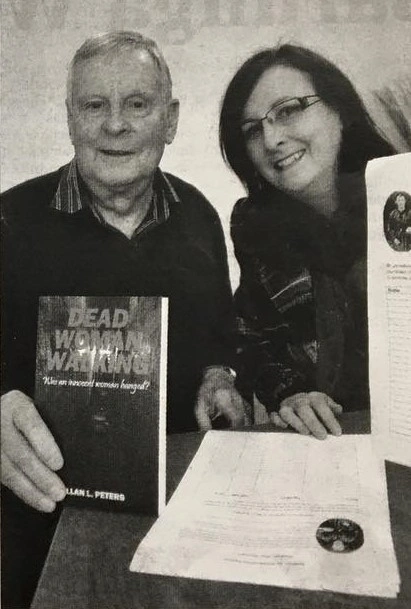
Personal Interst and Background
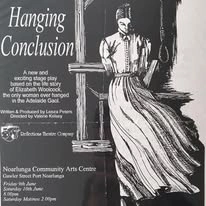
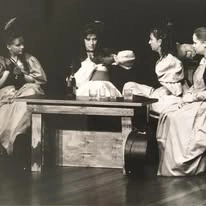
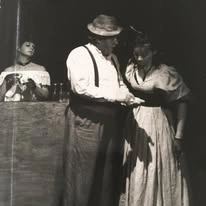
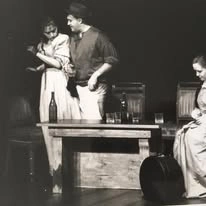
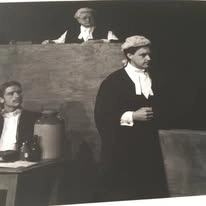
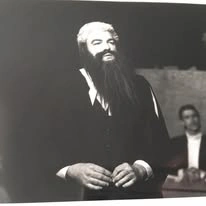
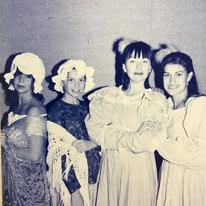
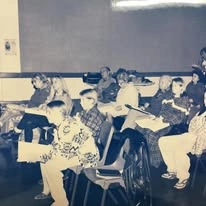
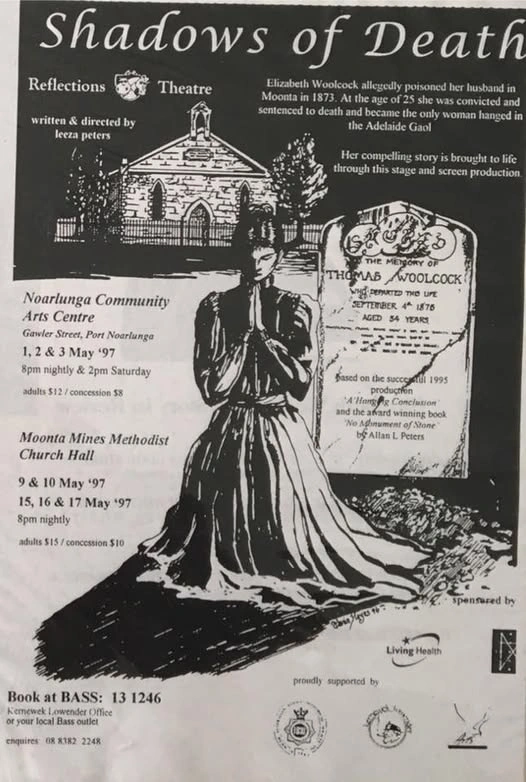
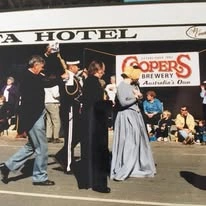
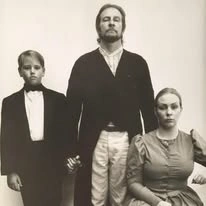
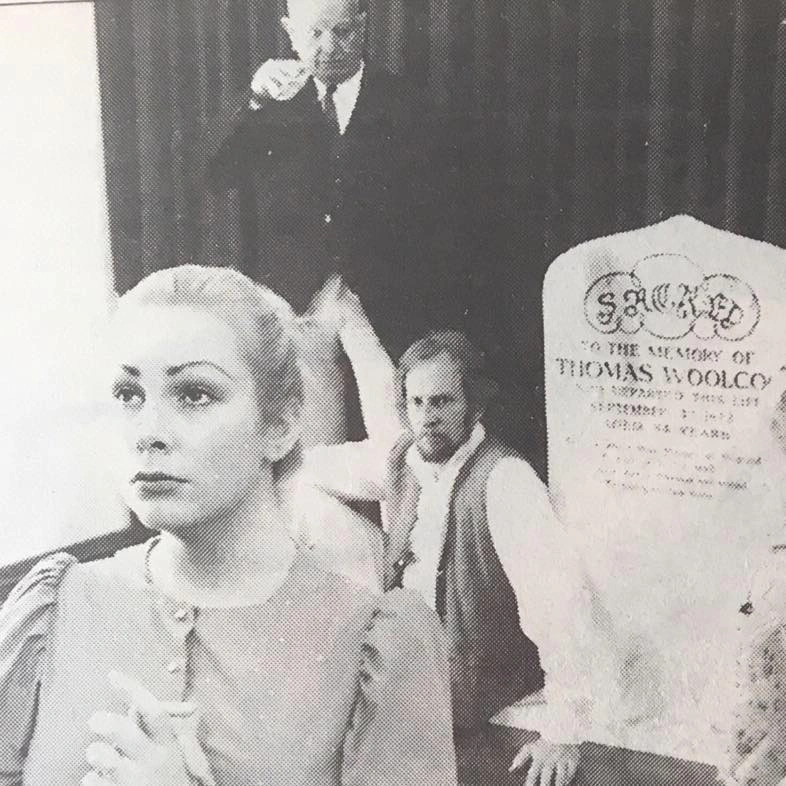
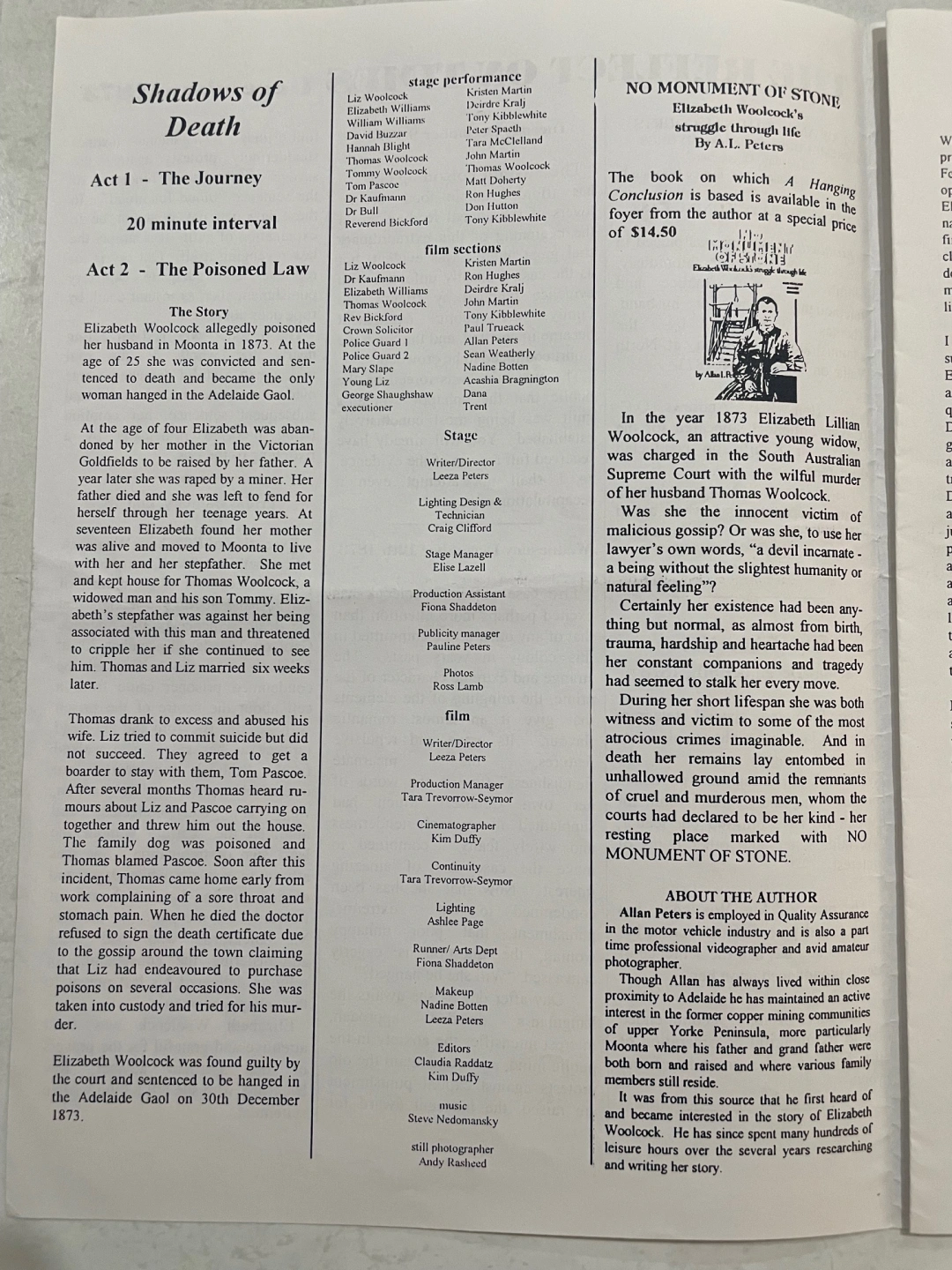
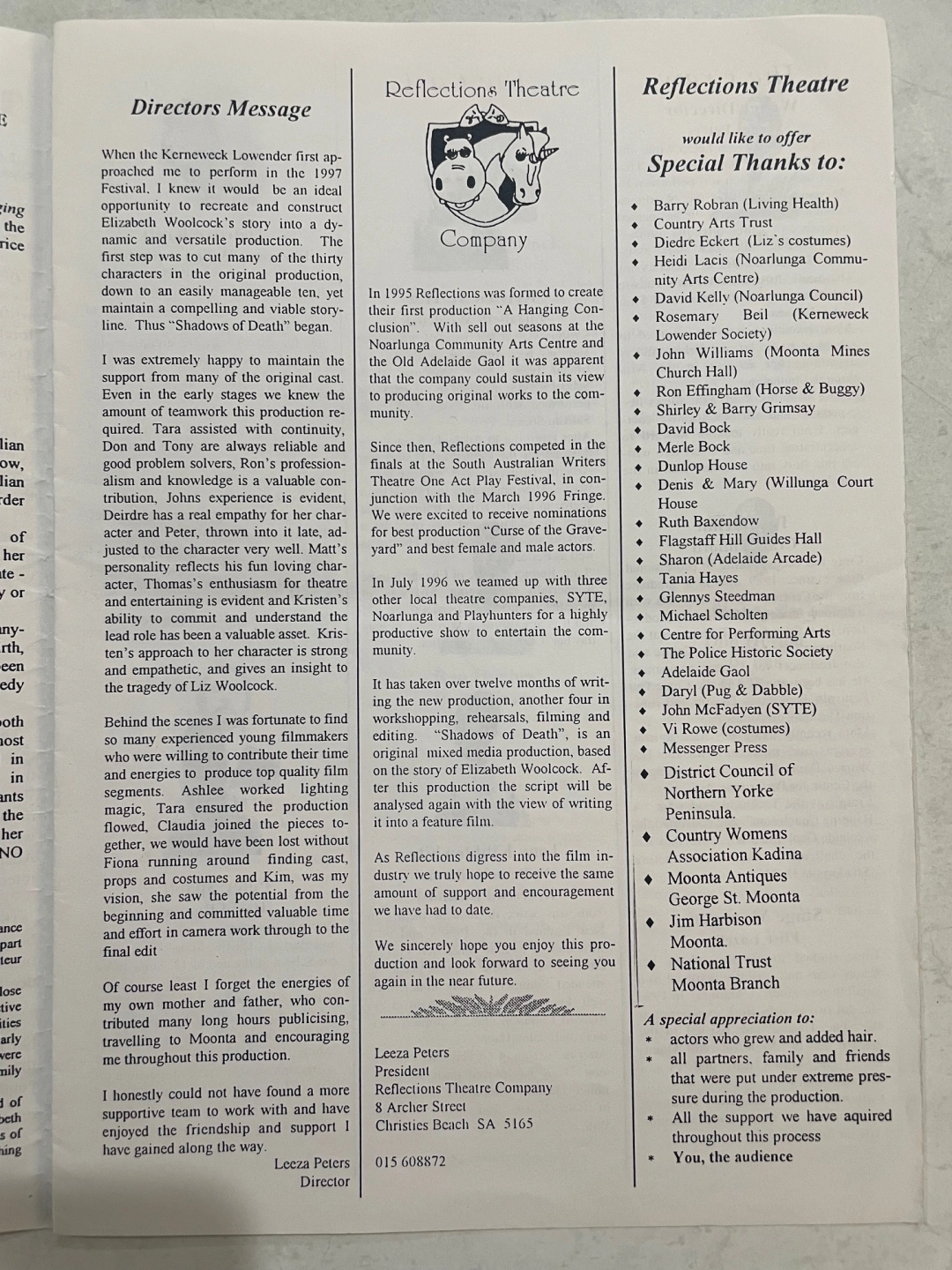
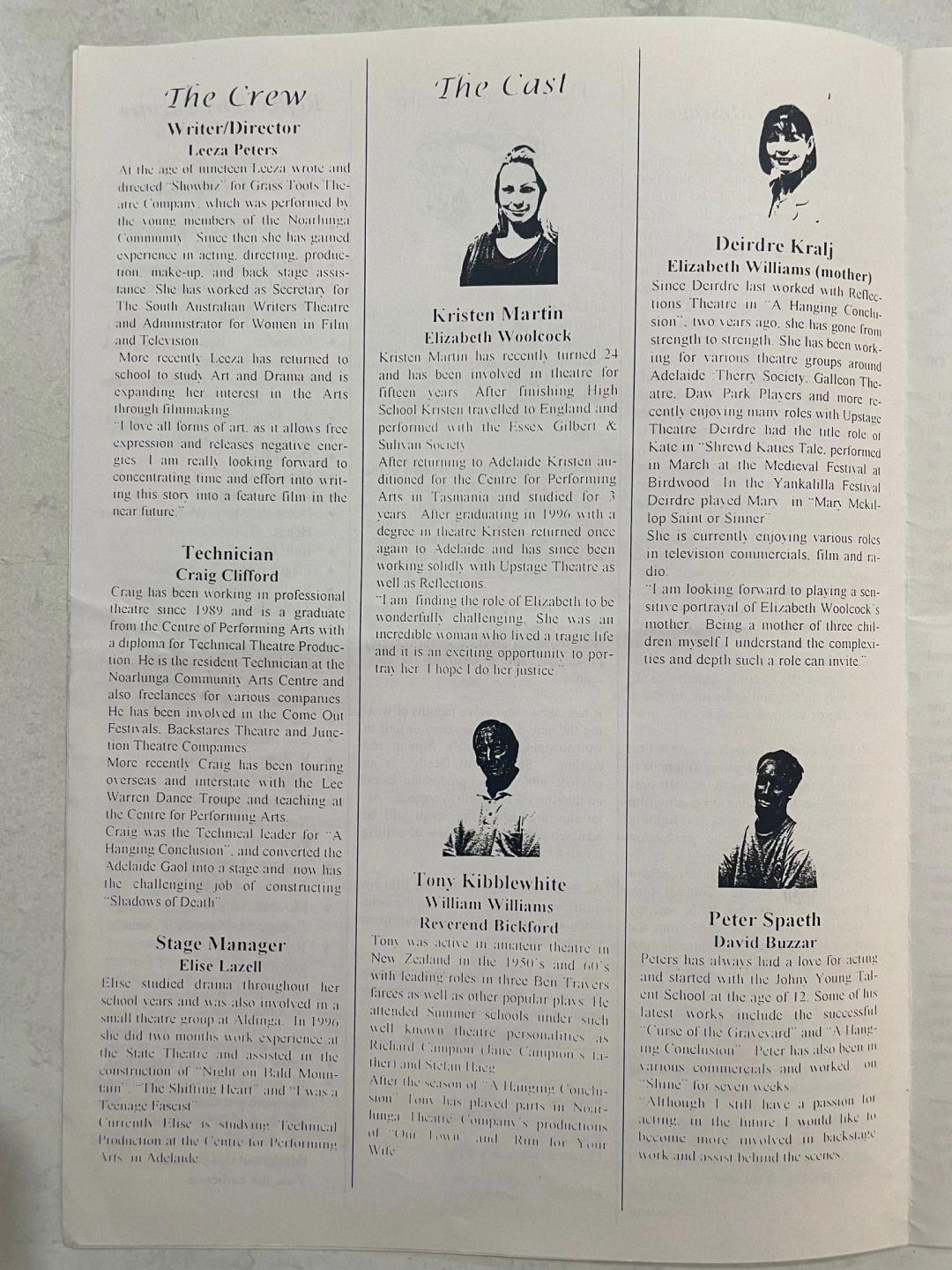
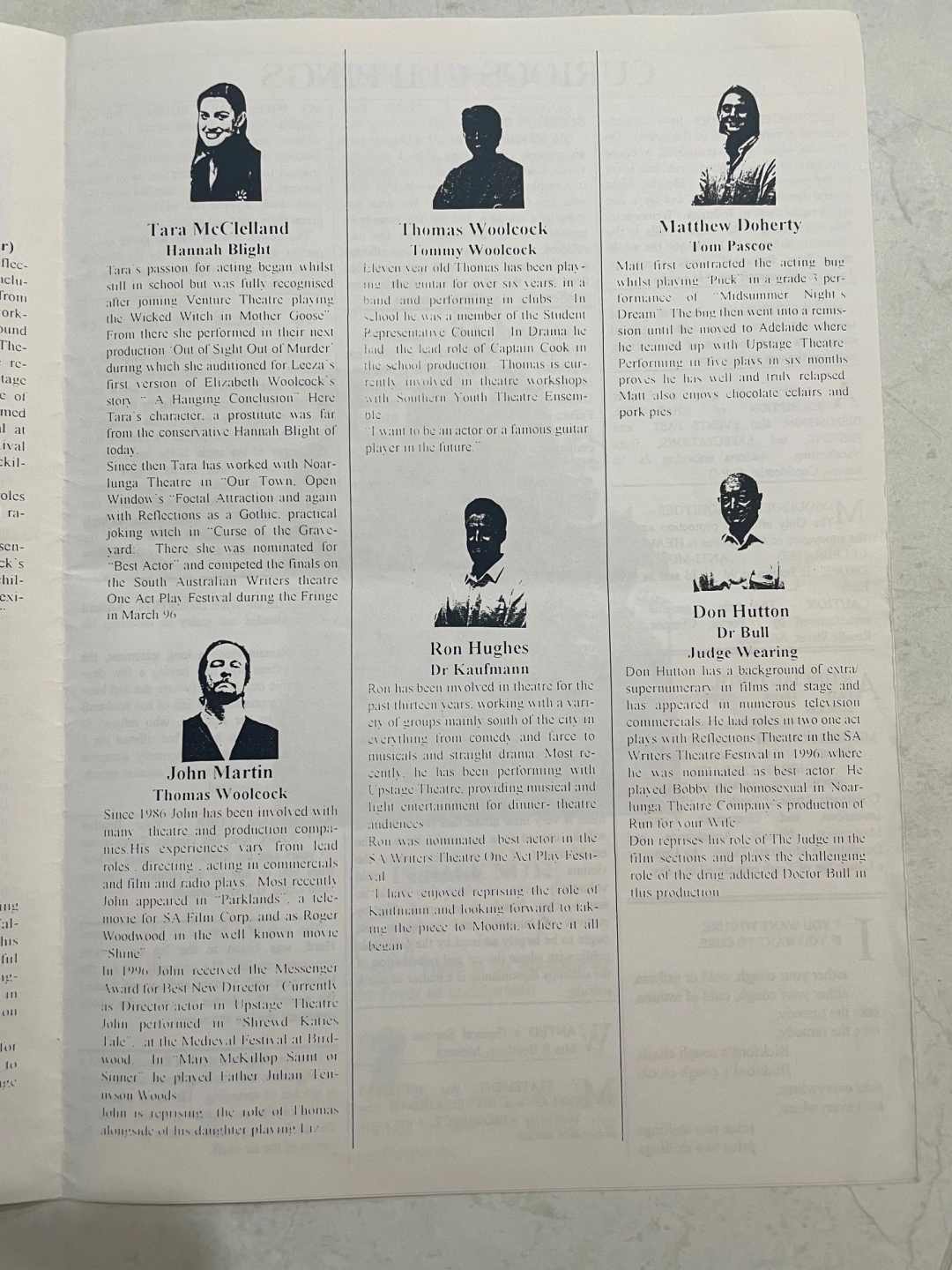
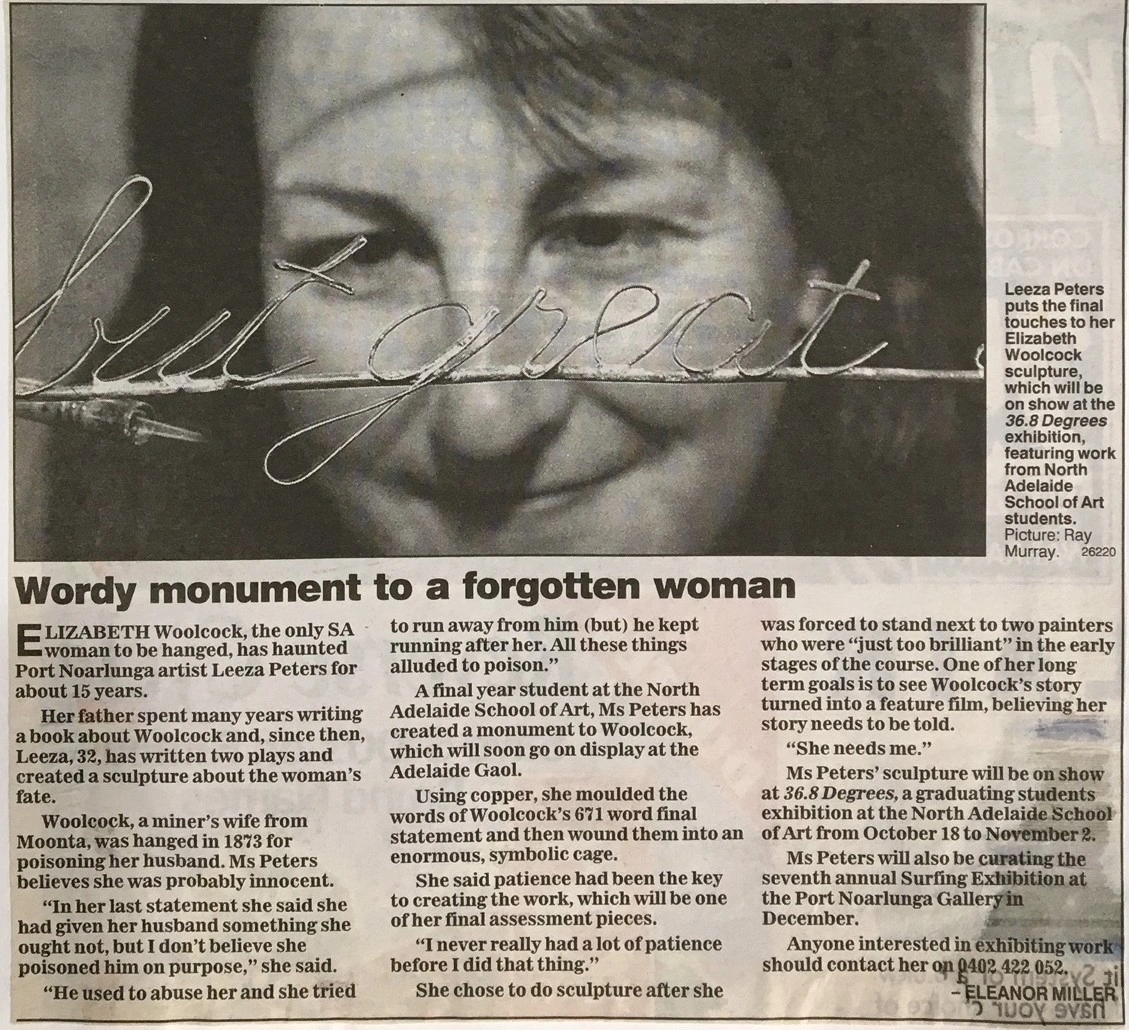
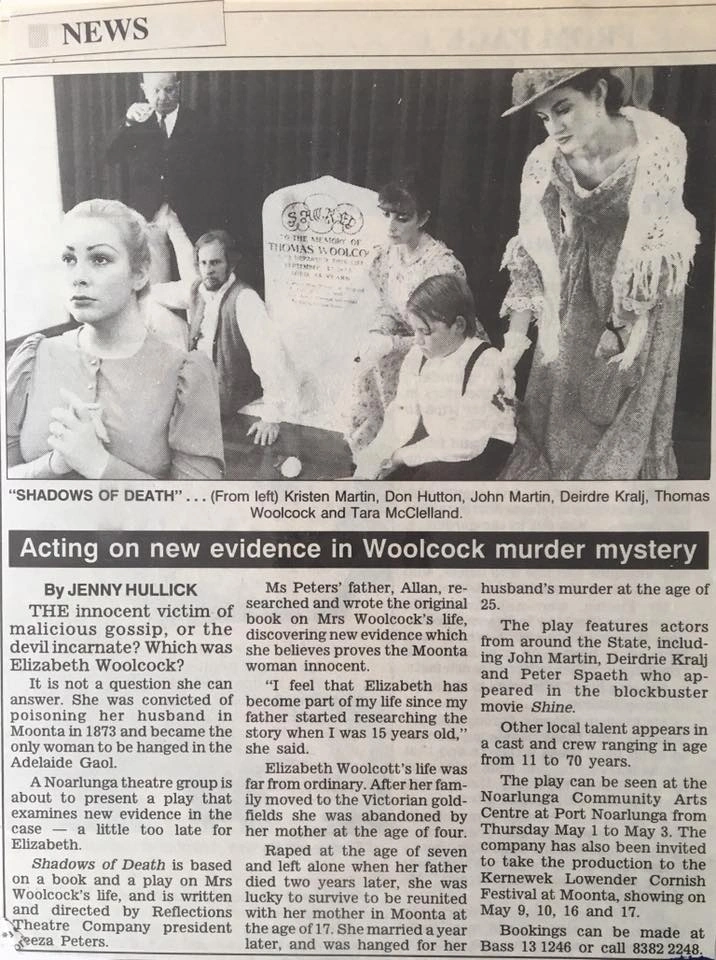
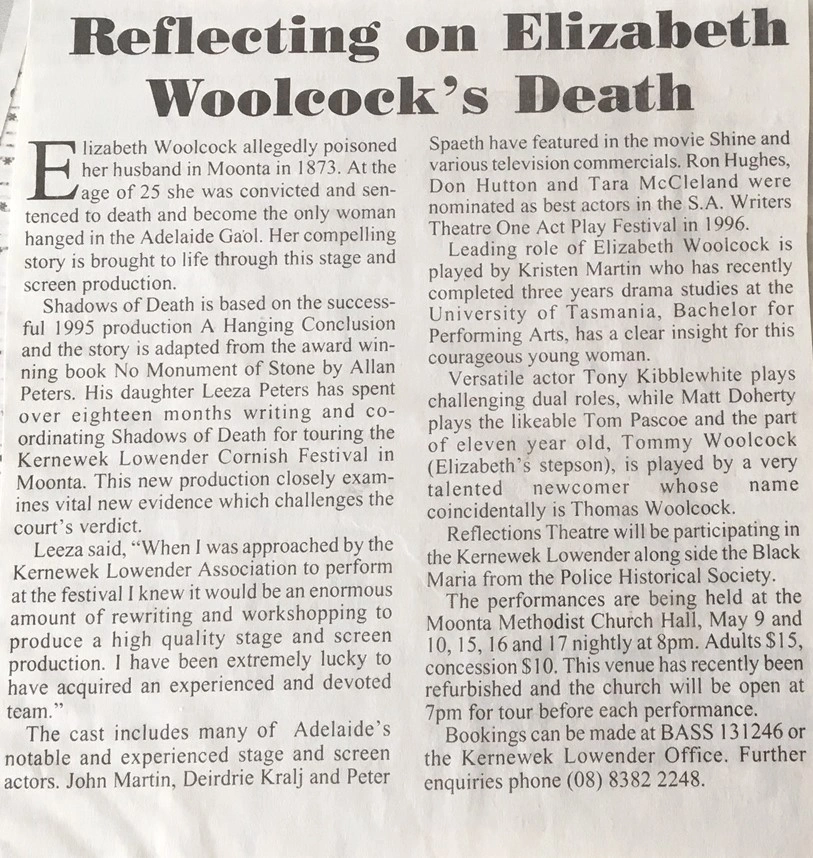
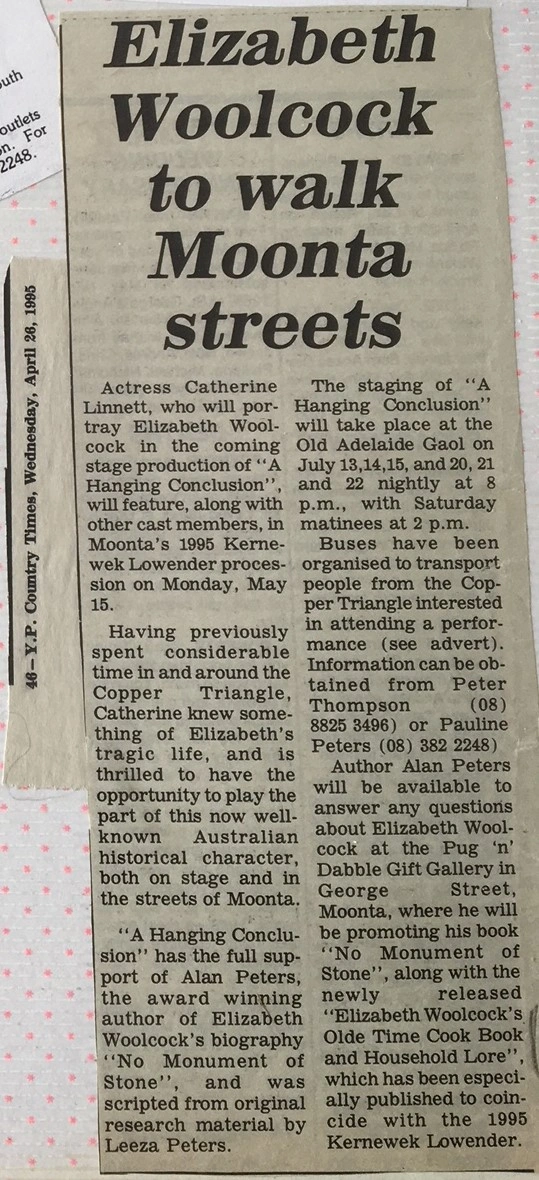
Since her father’s book, No Monument of Stone, Leeza Peters has written and produced two theatre works, A Hanging Conclusion played to sellout audiences at the Old Adelaide Gaol, while Shadows of Death was the highlight for the Kernewek Lowender Festival in Moonta. In 2004, she also performed as Elizabeth Woolcock in a Mock Trial at the Adelaide Gaol for Law Week, bringing the case to life for audiences.
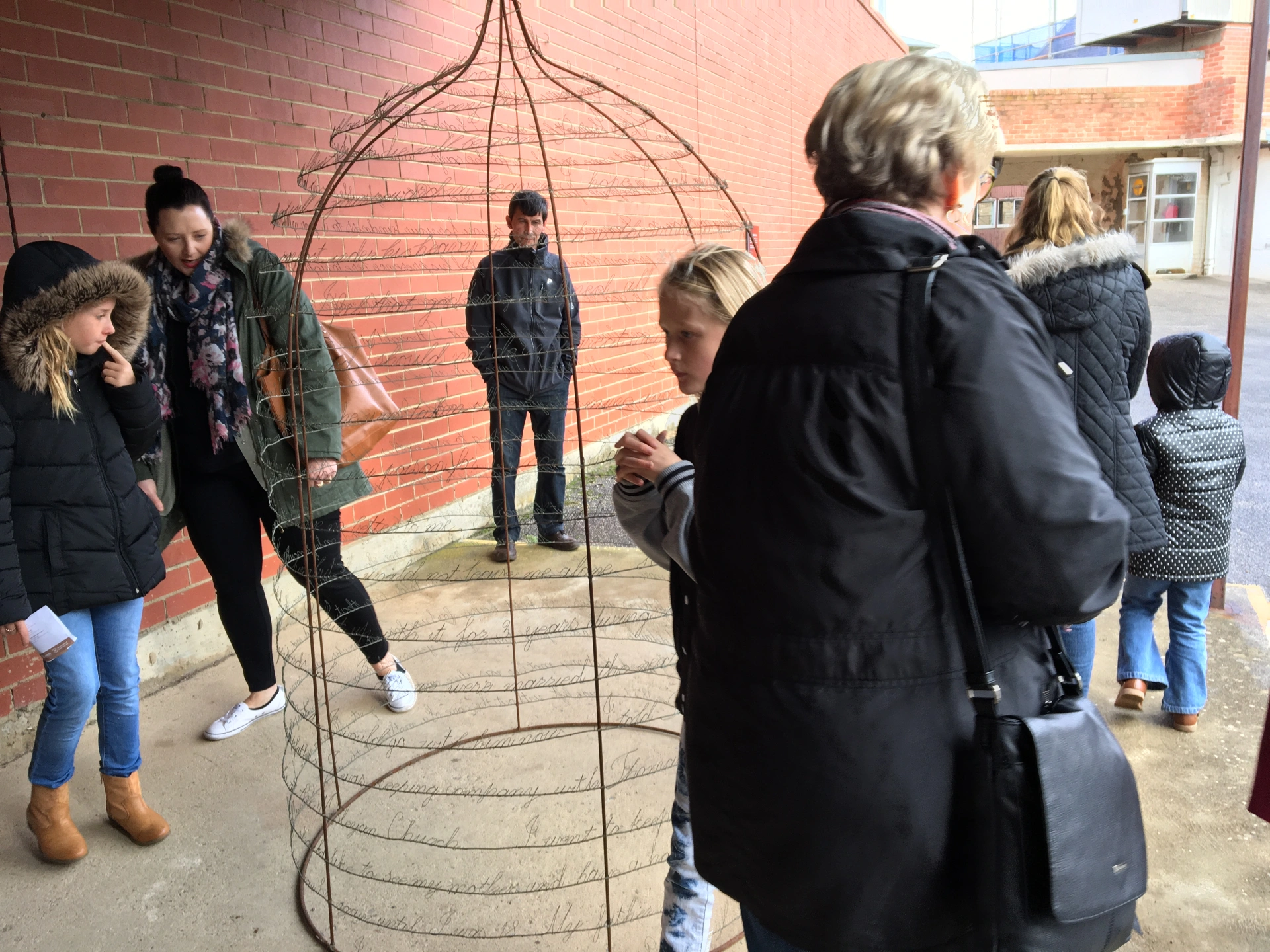
Leeza has written a manuscript and developed television scripts grounded in historical evidence, engaging with producers on potential screen adaptations. She designed, created and donated a monumental sculpture honoring Elizabeth Woolcock, now on display at the Adelaide Gaol, serving as both a memorial and a public prompt to reconsider the fairness of Woolcock’s trial and execution.
Her interest in Elizabeth Woolcock’s story is deeply personal, sustained, and evidence-based. It stems from decades of research, creative engagement, and advocacy, not from fleeting attention or general historical curiosity. Leeza’s pursuit of a posthumous pardon is driven by a conviction that the historical record demonstrates a serious miscarriage of justice and that Elizabeth Woolcock deserves formal recognition as an innocent woman wrongfully executed by the State of South Australia.
See below in the Gallery for more information.
Gallery
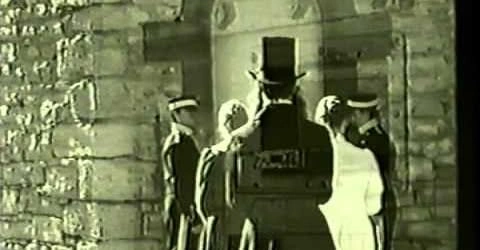
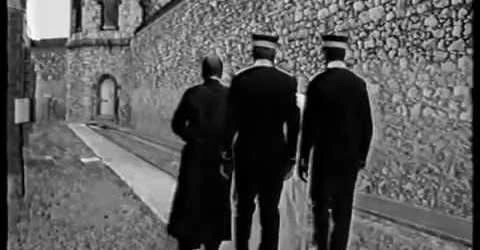
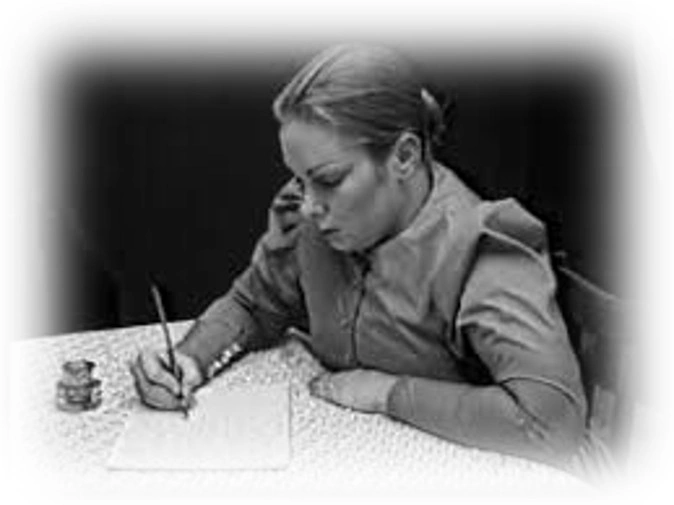
A Hanging Conclusion - 1995
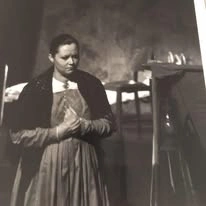


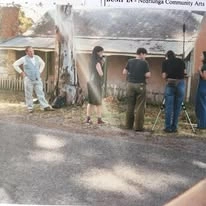
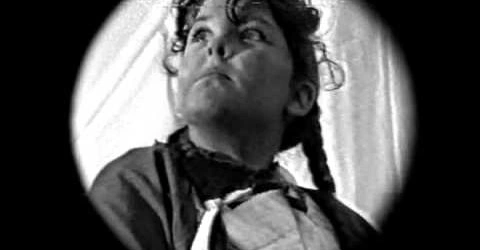
Shadows of Death 1997


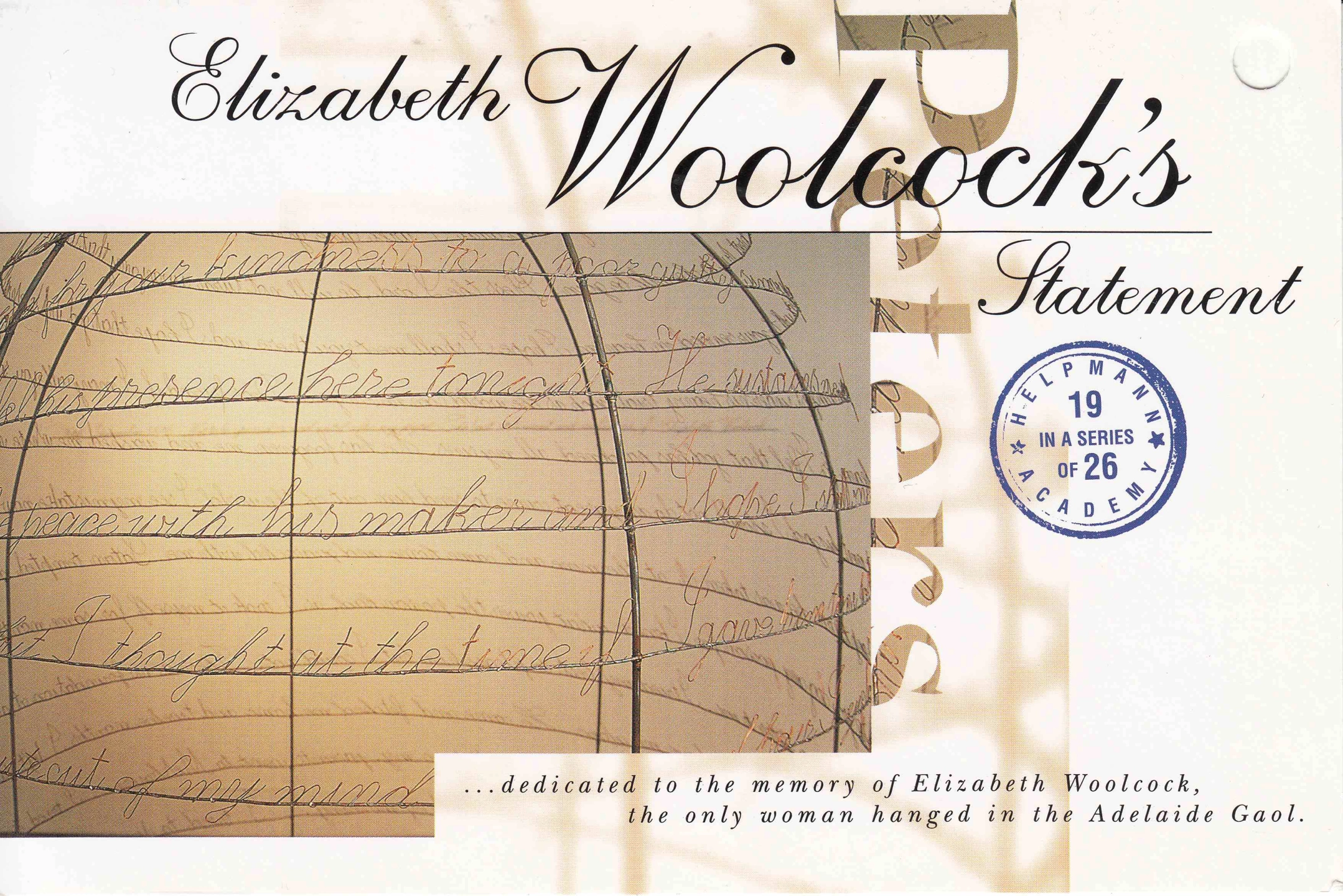
Elizabeth Woolcock Monument

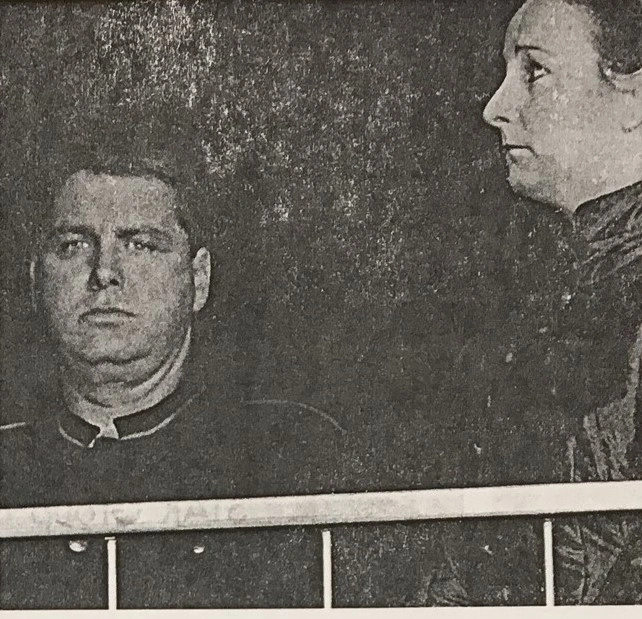
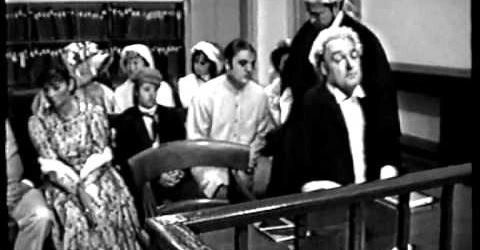
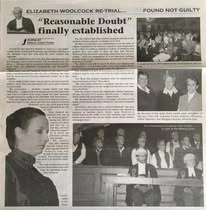
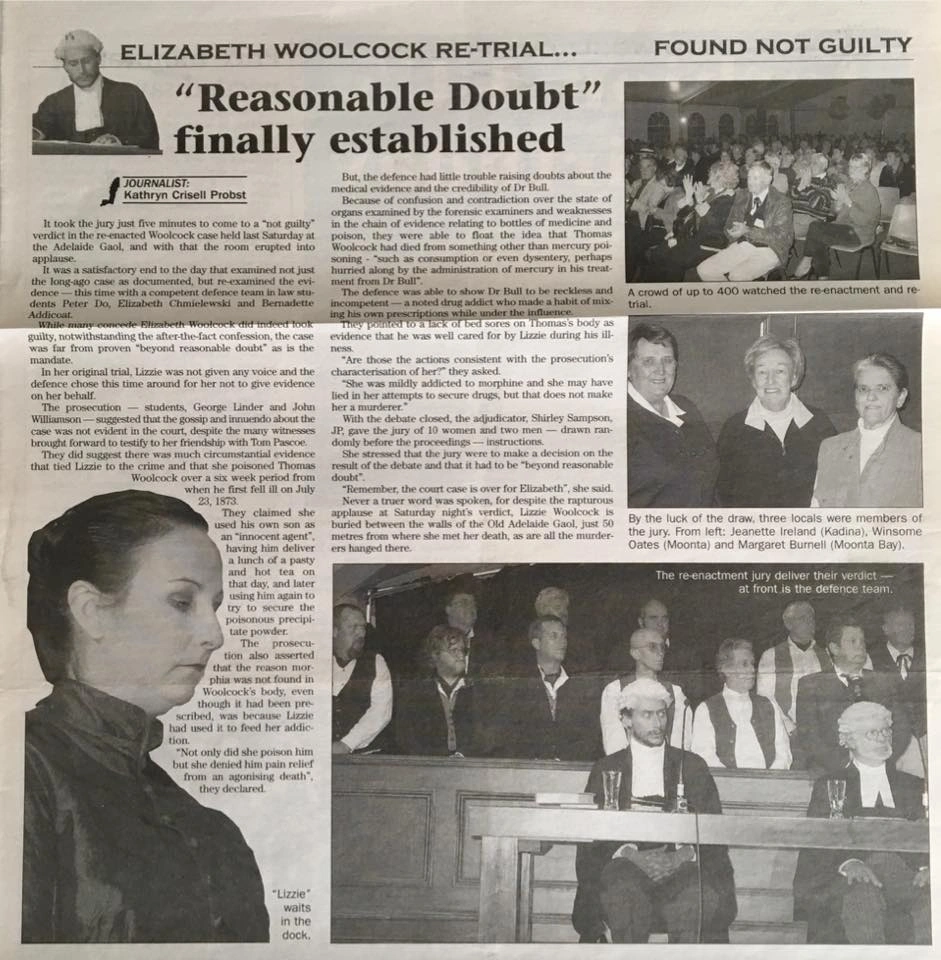
Mock Trial - Adelaide Gaol 2004 - Law Week
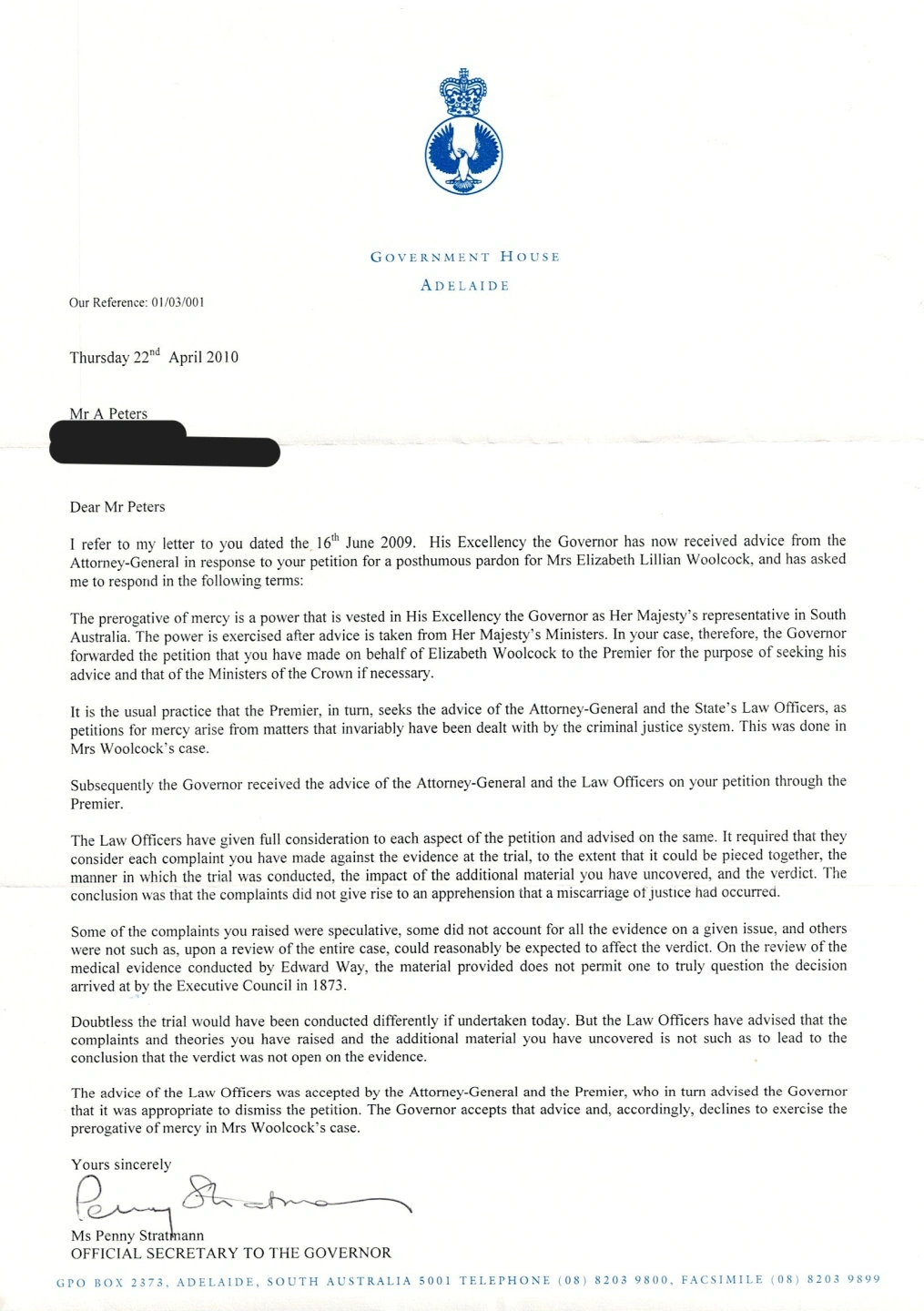
Petition to Governor 2009 & decline 2010
Petition to Governor 2011 & decline 2012



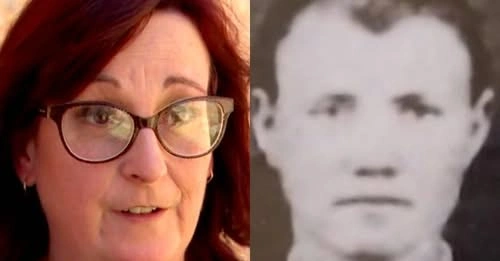
ABC News 3 April 2021
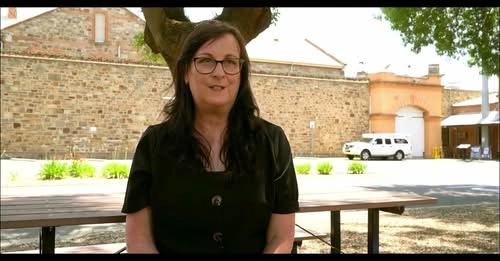
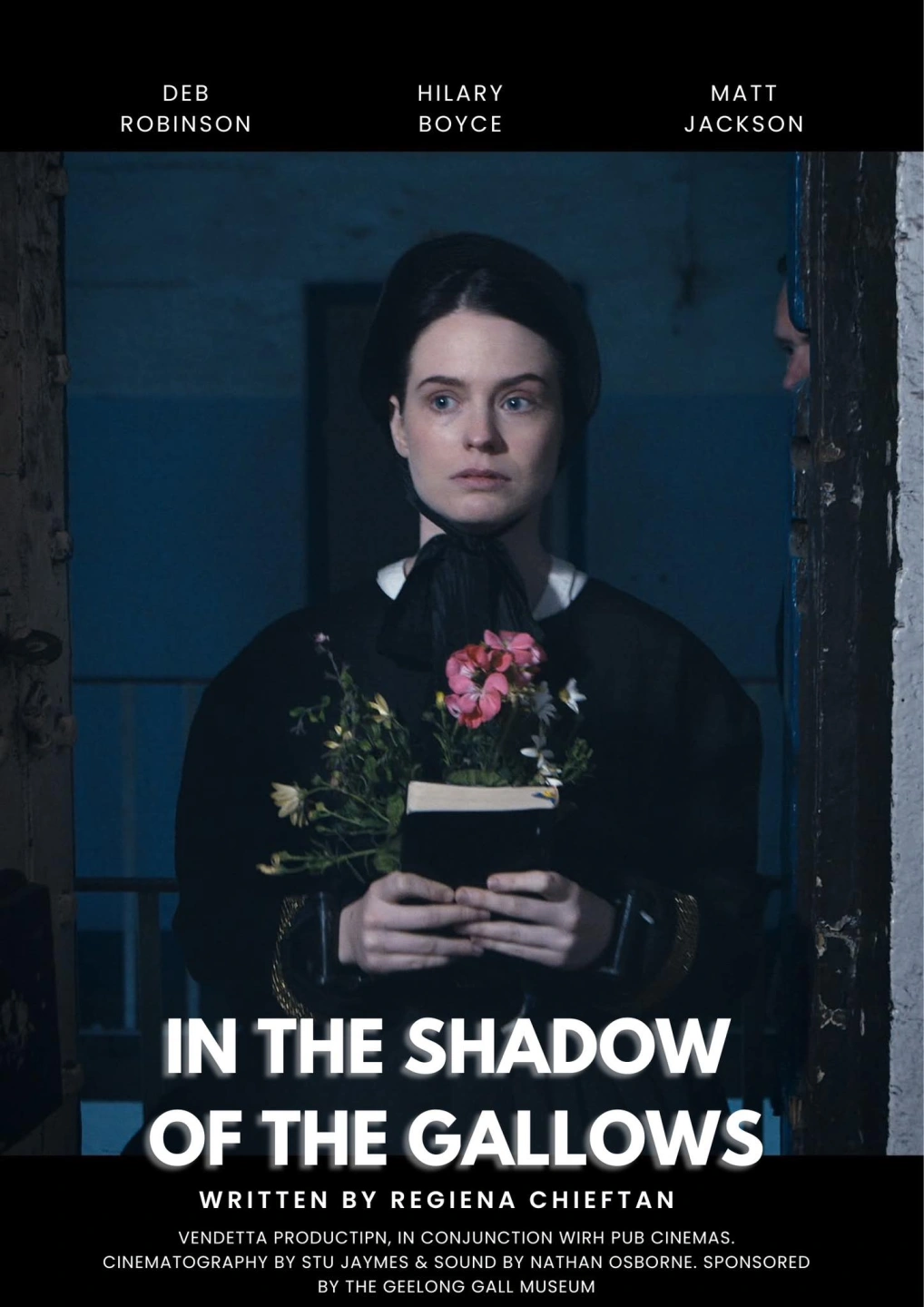
Elizabeth Woolcock Documentary 30 December 2023

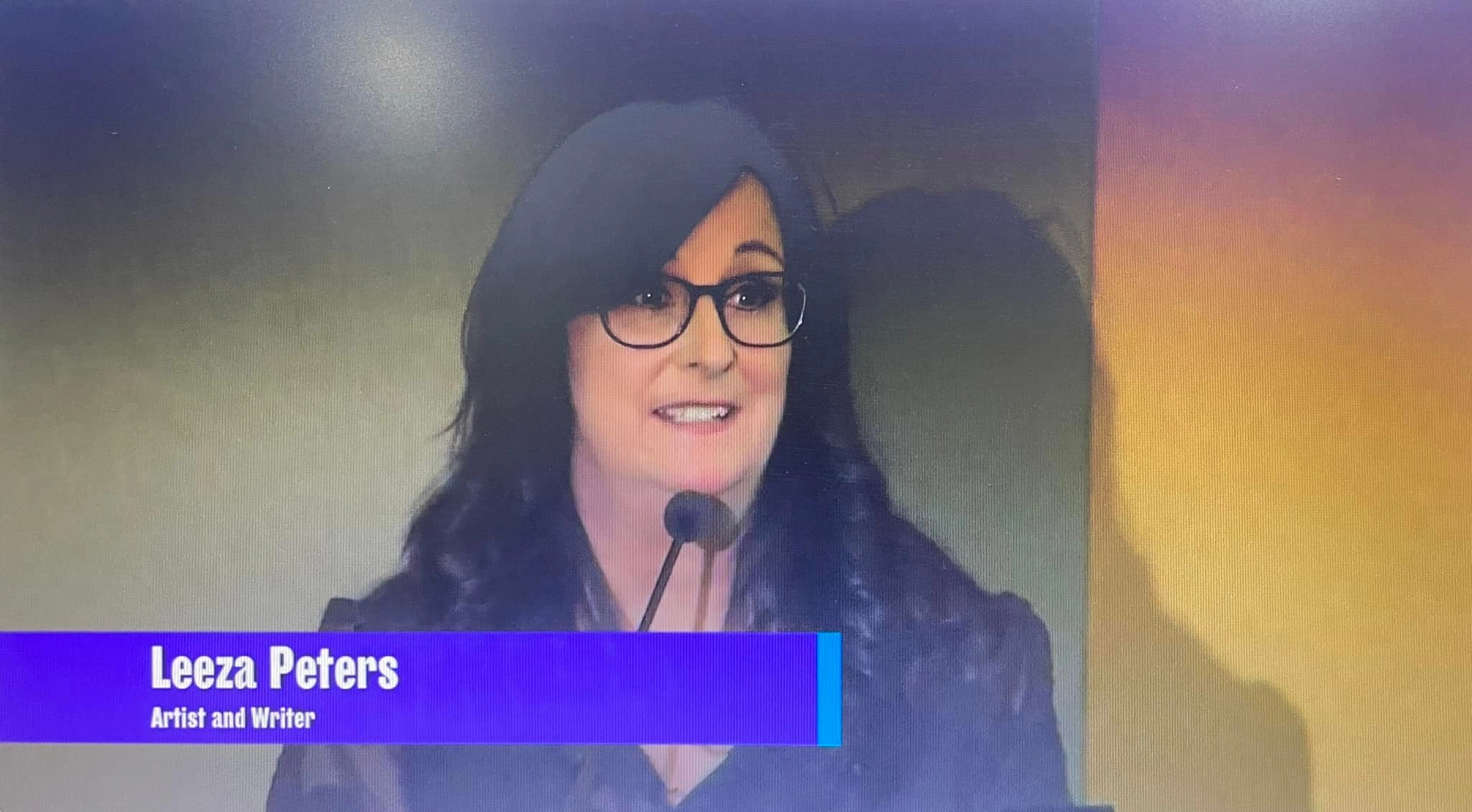
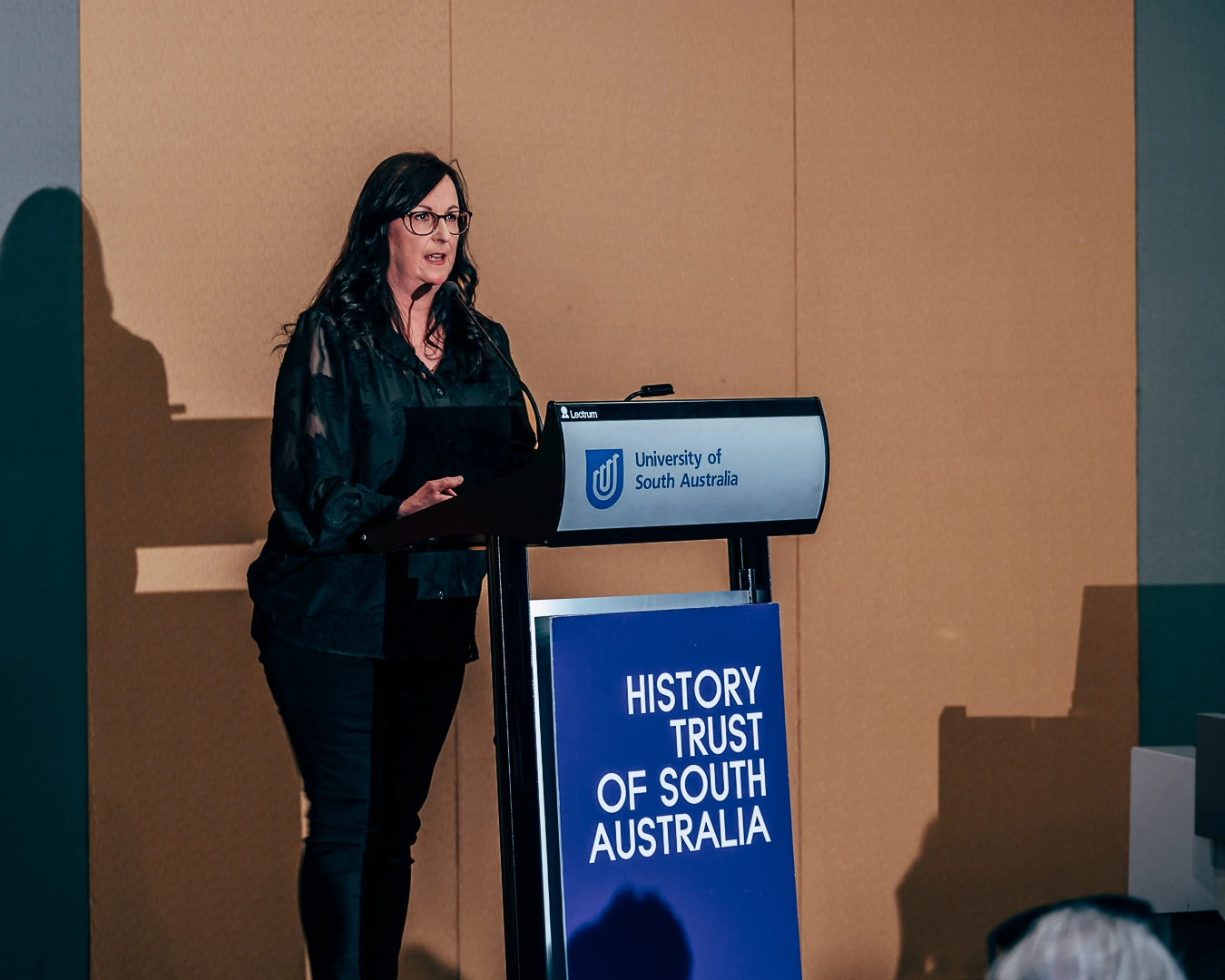
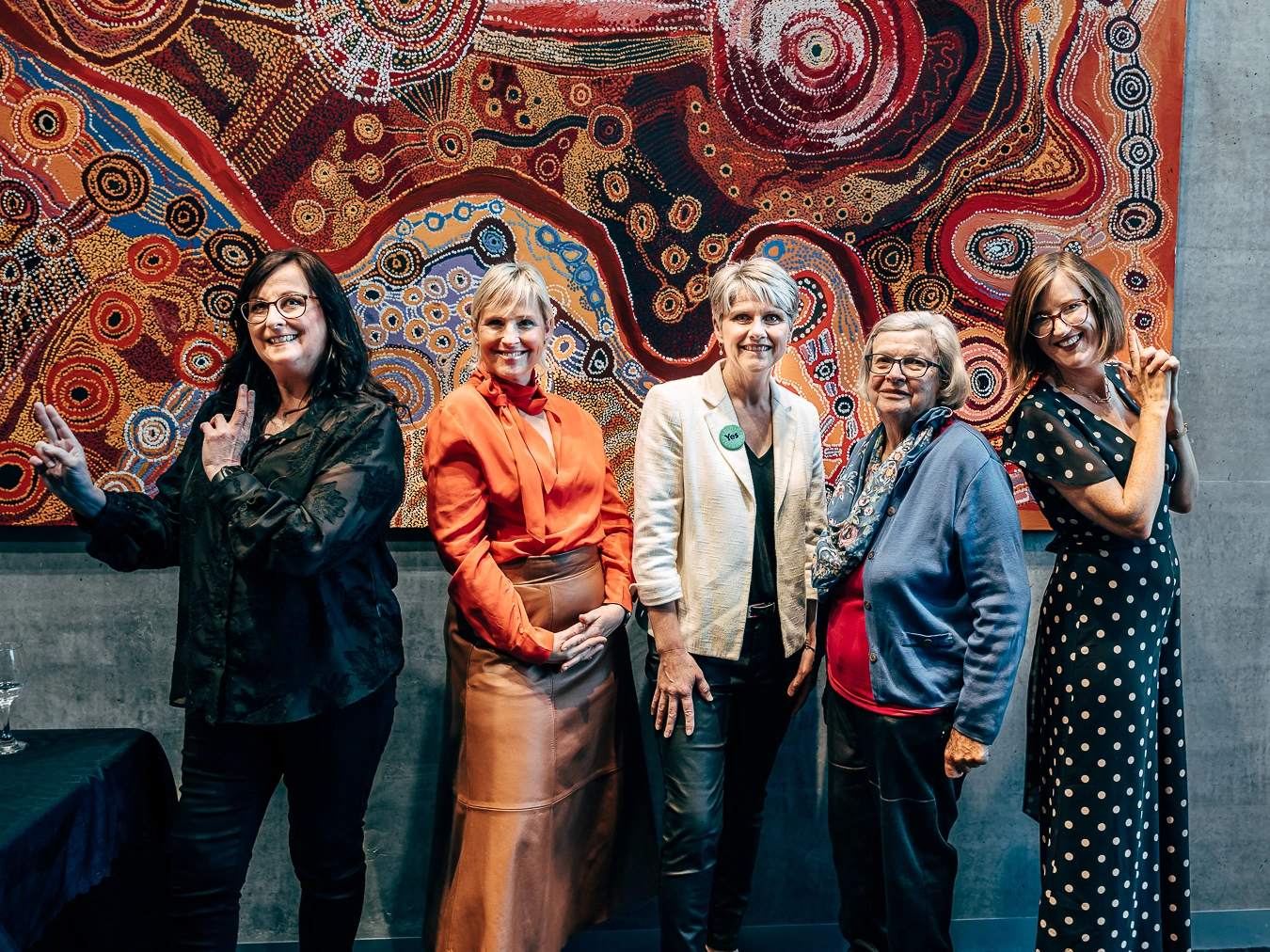
Talking History - Wonder Women - History Trust SA 2023

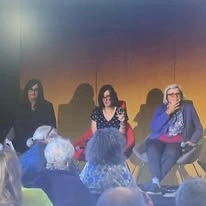


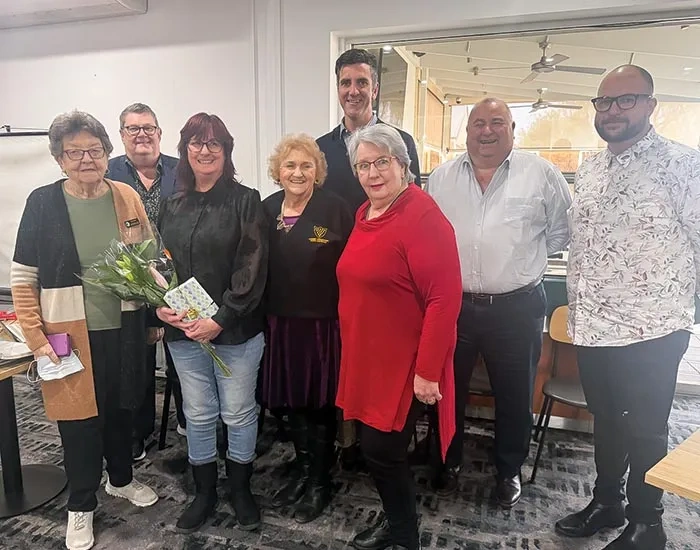
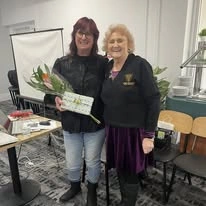
Cornish Association SA Moonta 2025
Media Articles
The Advertiser 2014 link here






Power point presentation
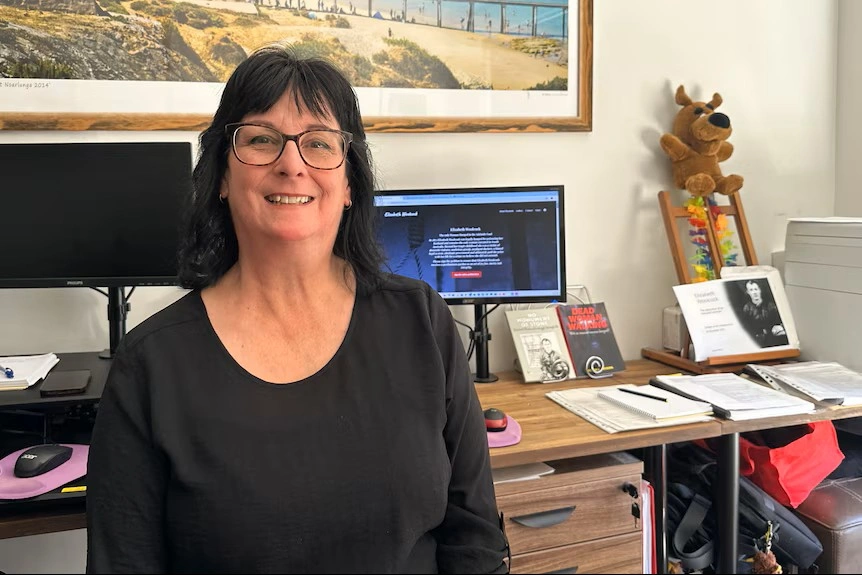
ABC News 8 March 2026

ABC Radio interview 9 March 2026
Frequently Asked Questions
Dead Woman Walking is a Speculative Biography. A speculative biography is a form of life writing that openly integrates imagination, conjecture and literary techniques (like narrative and metaphor) with historical facts to explore a subject's inner life and motivations, especially where historical records are sparse, allowing for a richer, more complete, but acknowledged "possible" version of a life story rather than a definitive one. It moves beyond pure factual recounting to fill gaps with informed speculation, creating thought-provoking interpretations of a person's experiences, emotions, and the "what ifs" of their world.
When writing historical drama, there are often gaps in the record where events cannot be verified. In those instances, an author may choose to speculate about what might have happened in order to create narrative continuity. This is a legitimate creative choice, but it is important that such material is clearly understood as speculative rather than factual.
During his research, my father, Allan Peters, was unable to establish key details of Elizabeth’s life after the attack in the goldfields and before she was found by her mother. To bridge this gap, he used creative licence, including scenes depicting Elizabeth living with a chemist and his wife and supplying medicines to prostitutes. While this created a compelling narrative, these episodes are not supported by historical evidence. There are several other instances in the book where reconstruction and storytelling were used in place of verified fact.
Over time, these speculative elements have been repeated in podcasts, online media, and commentary as if they are established fact. This has blurred the line between documented history and creative interpretation, contributing to a distorted public understanding of Elizabeth’s story.
For this reason, these elements should remain recognised as narrative reconstruction and not be presented as established history or as part of her verified lived experience.
Only Elizabeth herself knew the full truth of what she endured, and the historical record should be treated with appropriate care and restraint.
Elizabeth Woolcock’s story matters to South Australian history for several reasons. Not because it is sensational, but because it sits at the intersection of law, gender, class, and colonial justice.
First, she was the only woman ever executed in South Australia. That fact alone makes her case exceptional. Capital punishment was rare for women across the British Empire, and when it did occur it usually reflected extreme social and legal failure.
Second, her trial exposes the limits of colonial justice. The case relied heavily on circumstantial evidence, contested medical testimony, and social assumptions about morality and character. By modern standards, the investigation and trial process raise serious questions about fairness, evidentiary standards, and judicial independence.
Third, Elizabeth’s story highlights the position of women in colonial society, particularly working-class women. She was young, poor, isolated, and without meaningful legal or social protection. Her credibility was judged through a moral lens rather than evidentiary rigor. That dynamic shaped both the trial and the public response to her execution.
Fourth, the case reveals how class and respectability influenced outcomes. Power sat with male professionals—doctors, lawyers, officials—whose opinions carried decisive weight. Elizabeth had no comparable voice. Her execution tells us as much about who was believed as about what was proven.
Finally, her story has become part of South Australia’s historical conscience. It forces an uncomfortable reckoning with how justice was administered, how myths replace evidence, and how easily narrative can harden into “fact.” That is why separating documented history from later speculation matters so much in this case.
Elizabeth’s importance is not just that she was executed. It is that her case reveals how the colonial legal system worked when tested at its margins—and who paid the price when it failed.
The best way to help is to sign the online petition here https://c.org/jdgy5F7wrS
Petitions will be available for signing in person at the Adelaide Gaol, Moonta and other locations soon.
Follow for more information on 'Elizabeth Woolcock deserves a posthumous pardon' webpage https://www.facebook.com/HangingElizabeth/
Elizabeth Woolcock’s conviction and execution occurred within a colonial legal system that failed to meet fundamental standards of fairness, reliability, and evidentiary integrity.
Grounds for the Petition:
Unsafe Conviction — The verdict was based entirely on weak and inconsistent circumstantial evidence and did not establish guilt beyond reasonable doubt.
Deficient Medical Evidence — Medical witnesses disagreed on diagnosis and failed to perform available confirmatory tests for mercury poisoning, yet firm conclusions were presented to the jury.
Uncertain Cause of Death — Forensic analysis identified the presence but not the quantity of mercury and did not establish that any detected amount was lethal or exclude medicinal or occupational sources.
Medical Treatment as Alternative Source — The deceased was prescribed medicines containing mercury compounds and other toxic substances, which may account for symptoms and findings.
Chemist Testimony Inconsistent with Poisoning Theory — Purchase records and testimony show requests connected to the Petitioner were for morphine and laudanum, not mercury compounds, and several poison sales were refused.
Contradictory Witness Evidence — Witness testimony indicates the deceased attributed his decline to earlier medical treatment and personally requested changes in doctors, contradicting the prosecution theory of manipulation by the Petitioner.
Inadequate Legal Representation — Defence counsel had minimal relevant experience, conducted limited cross-examination, called no defence witnesses, and failed to properly challenge medical and forensic evidence.
Procedural Unfairness — The Petitioner was not permitted to give evidence at trial, and her prior statement was withdrawn from jury consideration.
Prejudice and Gender Bias — Contemporary legal analysis indicates the case was influenced by moral and gender stereotypes affecting interpretation of evidence and clemency decisions.
Suppressed Exculpatory Correspondence — Material correspondence from Assayer William Ey, containing information relevant to the defence and plea for mercy, was withheld from public circulation and was unlikely disclosed to the trial judge or properly considered by the Executive.
Modern Review Outcome — A 2004 mock retrial concluded with a Not Guilty verdict based on evidentiary gaps, forensic uncertainty, and reasonable doubt.
Please sign this petition to ensure that Elizabeth Woolcock receives the justice she deserves and that her story is remembered as one of courage and tragedy, not of a convicted felon.
A message from Leeza
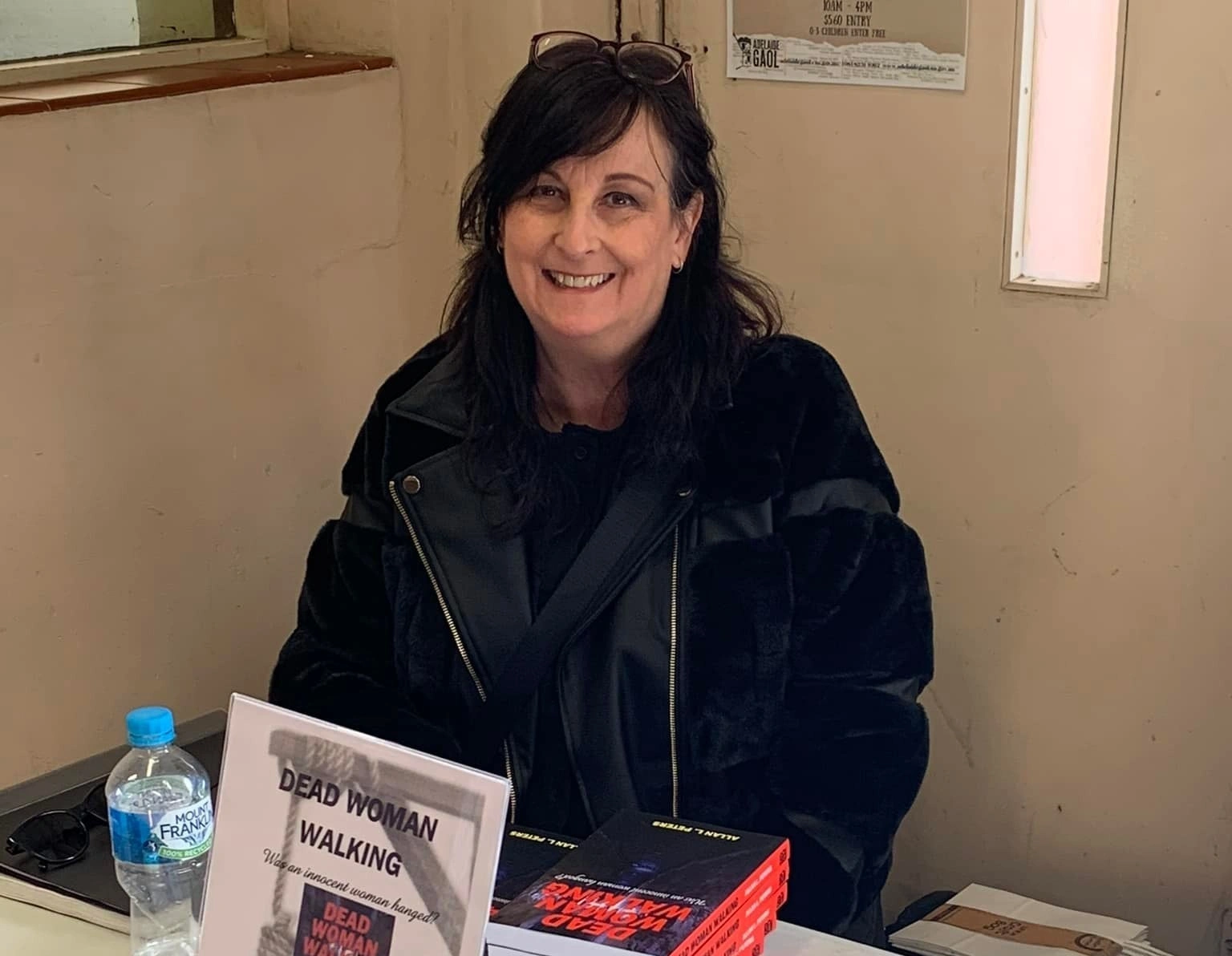
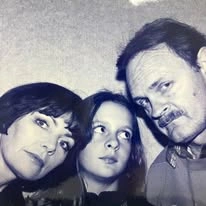
Hi, I’m Leeza Peters, and this is a true historical story about the only woman ever hanged at the Adelaide Gaol. This website is dedicated to my father, Allan Peters, who first heard Elizabeth Woolcock’s story from his grandmother in Moonta, regional South Australia, when he was a young boy. He went on to spend more than forty years researching her life and trial, and wrote the books No Monument of Stone and Dead Woman Walking.
When I was twelve years old, I helped Dad type his first manuscript on a manual typewriter, alongside my sister and my mum. That early experience marked the beginning of a lifelong family commitment to uncovering Elizabeth Woolcock’s story and seeking justice for a woman who was denied it in life and in death.
Our family is committed to Elizabeth Woolcock’s story. Please join us in the quest to seek justice. You can get involved by signing the petition or by contacting me if you have ideas or would like to help in any way.